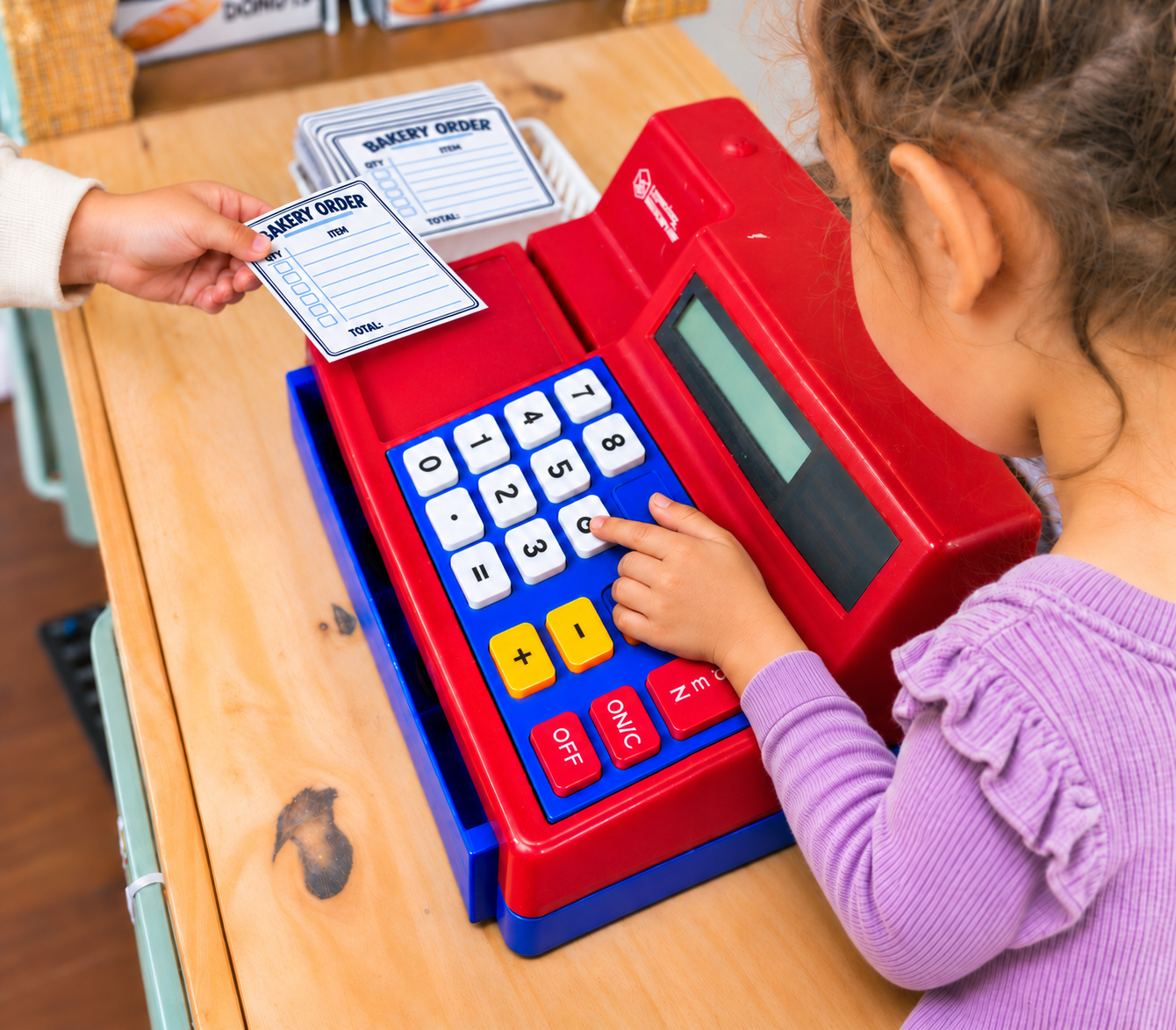
Before our bakery ever opened, my kids were already invested.
They watched me cut and laminate the pieces and kept asking, “When can we play with it?” I finally put it out on Monday, and they were ready. They had loved our pumpkin patch dramatic play center, but I could tell this change felt brand new to them.
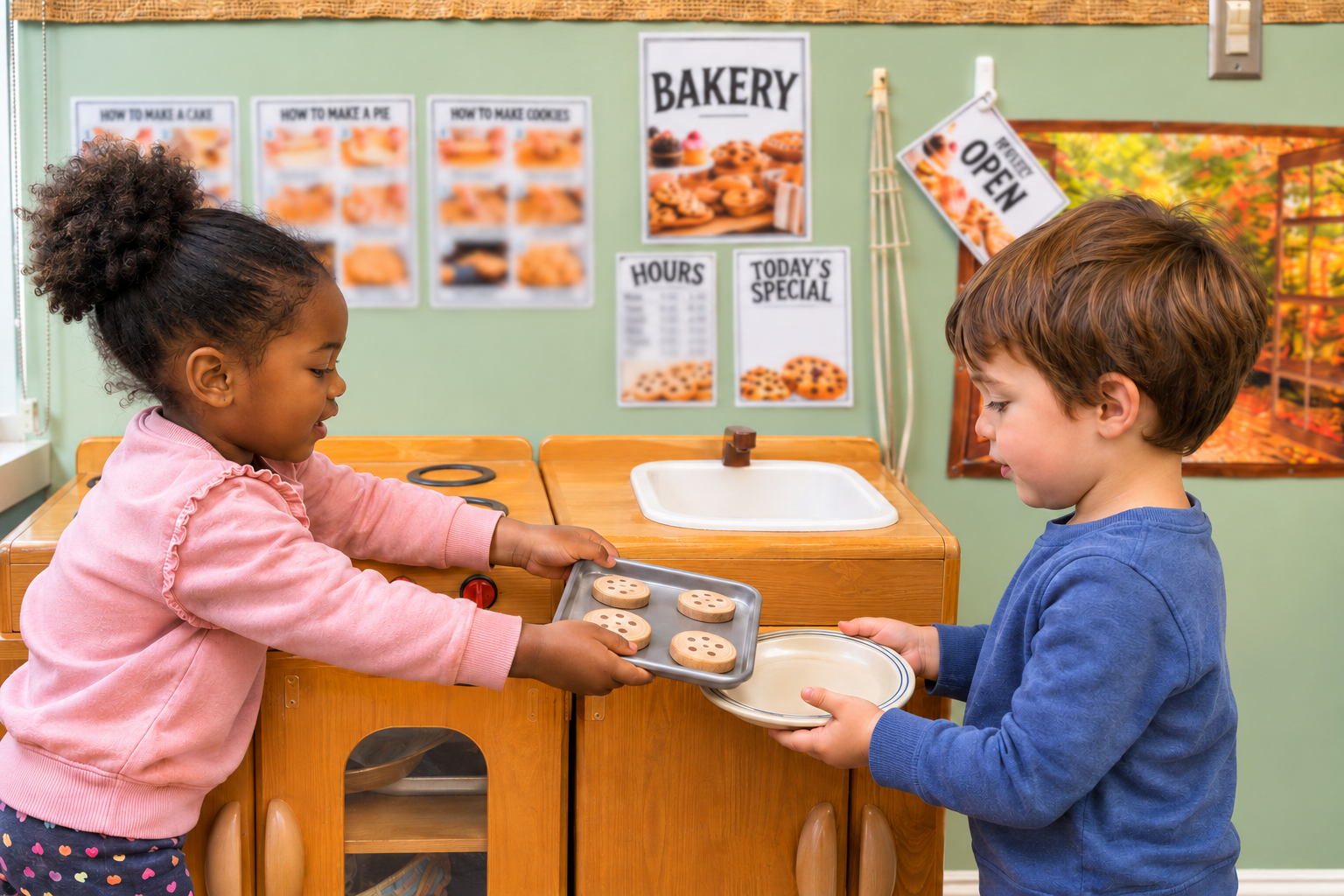
Our bakery started with what was already in the classroom
I did not buy a whole new dramatic play area. I used the kitchen, table, cash register, dishes, and pretend food we already had. Then I added the bakery printables: menus, labels, receipts, signs, and visual process posters.
A simple cardboard display became the bakery case. The little table became a place to look through menus, take orders, and serve customers. The register gave them a natural place to pay, count, and hand over receipts.
If you are using clean jars, bottles, or boxes you already have, my free DIY Kitchen Staples labels can help turn them into bakery ingredients and everyday kitchen props.
That is one of my favorite things about dramatic play. The furniture can stay the same. A few intentional details can completely change what the children imagine the space to be.
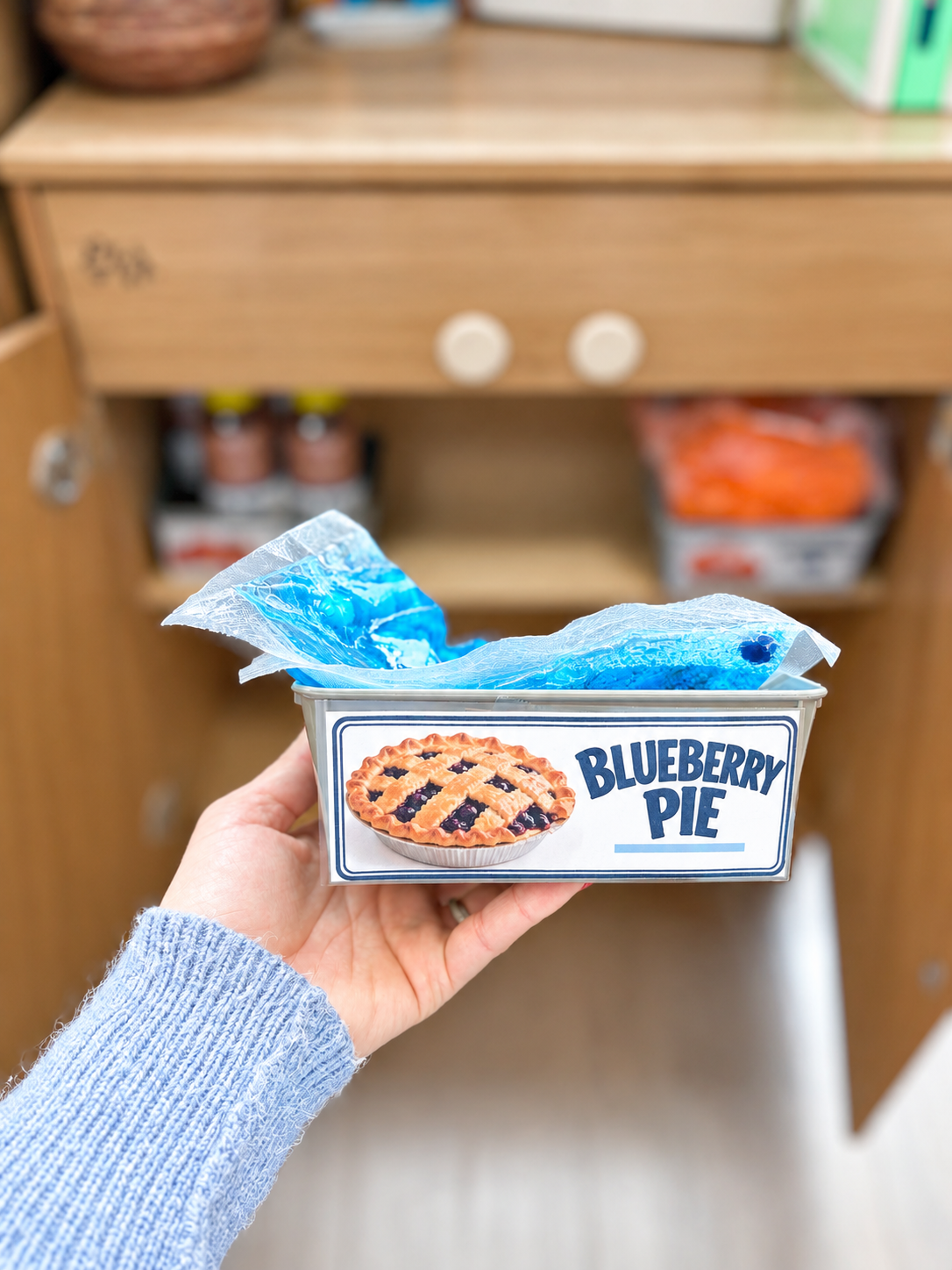
The process posters became part of their play
One little boy stood in front of the process posters and carefully pretended to bake. He looked at the finished cookie picture and noticed that it had sprinkles.
“Miss Lindsay, we need sprinkles!”
“Oh, you’re right,” I told him. “I will make us some.”
That tiny moment was exactly why I wanted the pictures on the wall. The posters were not just decoration. He was studying them, following the steps, noticing what was missing, and making a plan for what the bakery needed next.
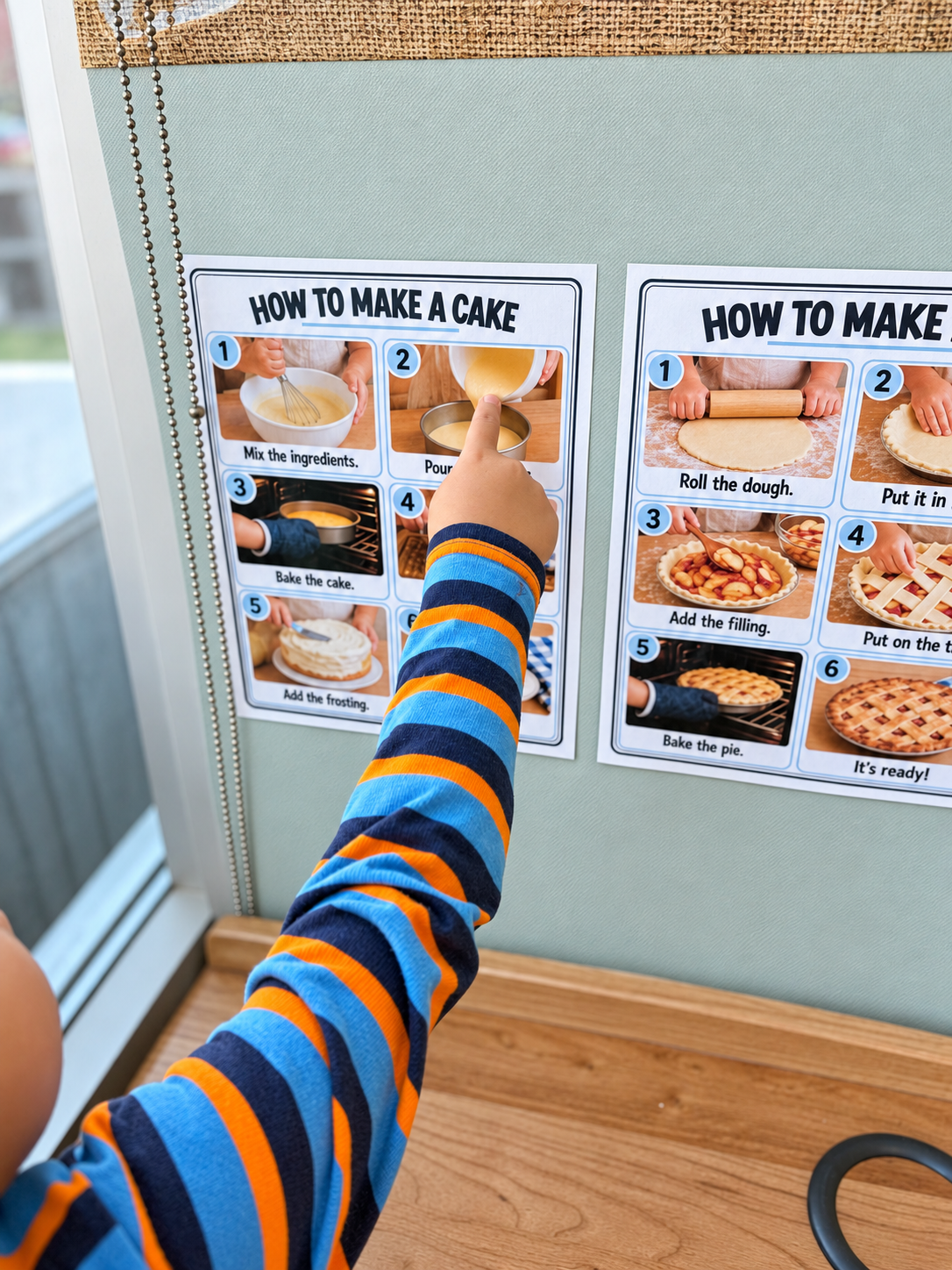
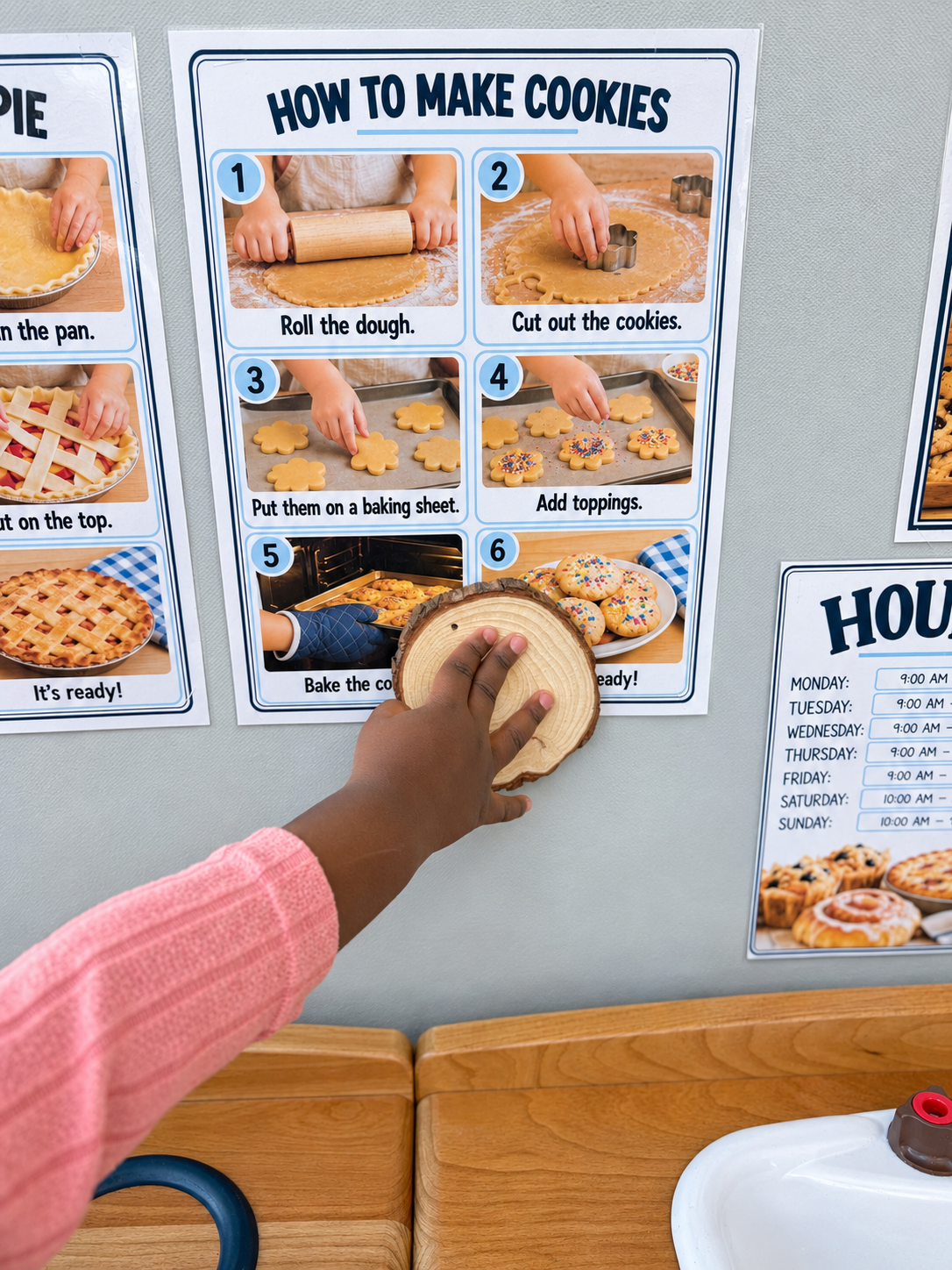
I did not have to turn it into a lesson. He found the problem because the play mattered to him.
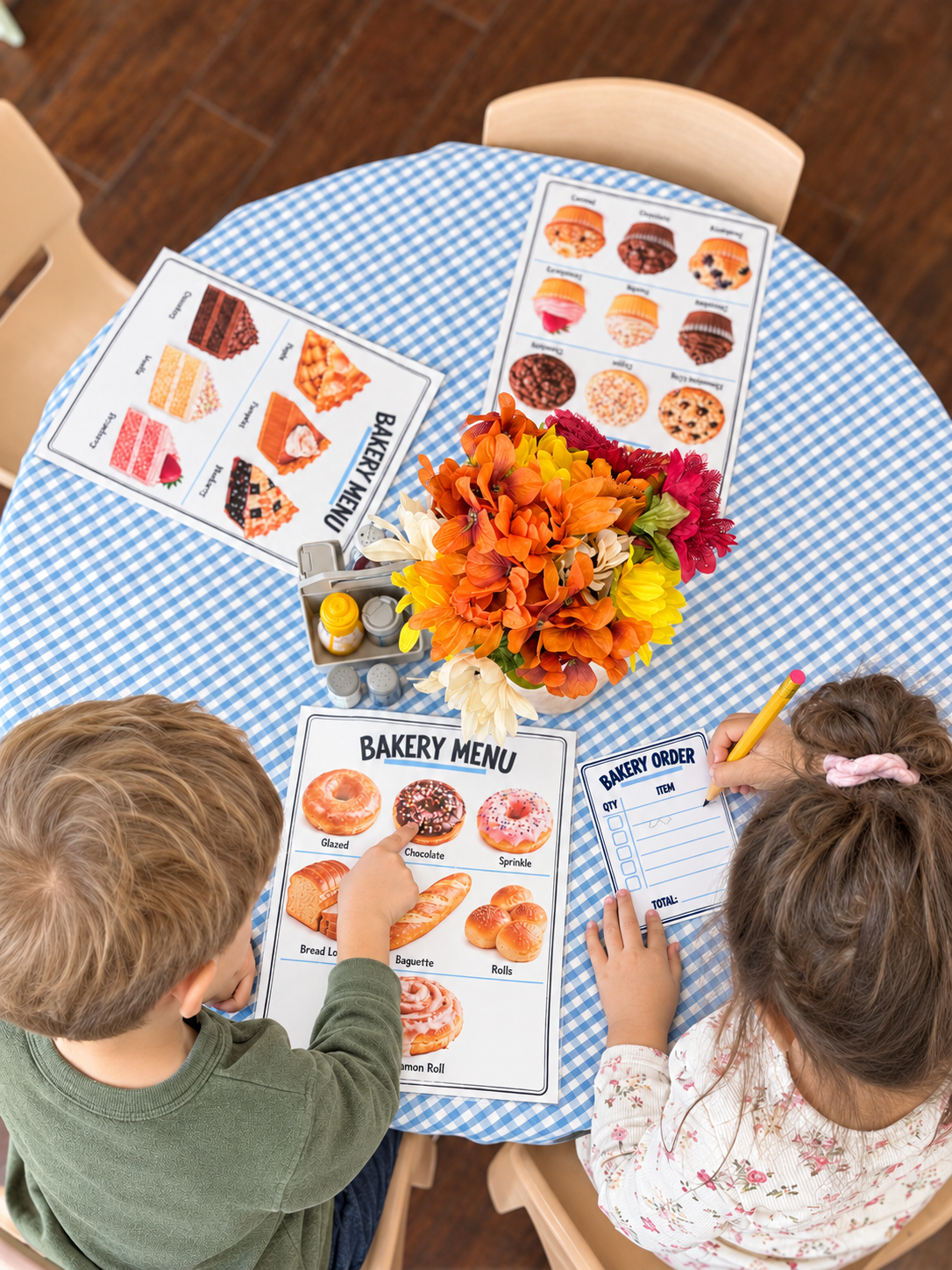
I let them decide how the bakery worked
I did not assign a baker, cashier, customer, or server. The children decided who they wanted to be, and those roles changed as their play grew.
They studied the menus, asked each other what they wanted, wrote on the order forms, filled the bakery containers, carried food to the table, and used the cash register. Their conversations became longer because they had a reason to talk to one another.
There was early writing in the receipts and order pads. There was counting at the register. There was sequencing in the baking posters. There was problem-solving when the bakery needed something that was not there yet. Most importantly, there was the kind of joyful, sustained play that makes children want to come back again the next day.
You do not need a picture-perfect bakery
Your bakery does not have to match mine. Use the shelf, table, kitchen, baskets, trays, and pretend food already in your room. A menu, a few labels, a sign, and one clear visual showing how something is made can give children plenty to work with.
Start simple, then listen. The children will tell you what the bakery needs next—sometimes very confidently, especially when the cookies are missing their sprinkles.
Want to create a bakery in your classroom?
The Bakery Dramatic Play pack includes the menus, signs, labels, process posters, receipts, and other printables I used to set up this center.
More play-based classroom ideas
If you enjoy seeing how one classroom space can become something completely new, take a look at my preschool pumpkin patch dramatic play setup.
And if you ever feel tempted to step in and make the play look a certain way, read Just Let Them: Why Children Need the Freedom to Play Their Own Way. The best moments in this bakery happened because the children were free to notice, decide, and create their own story.

