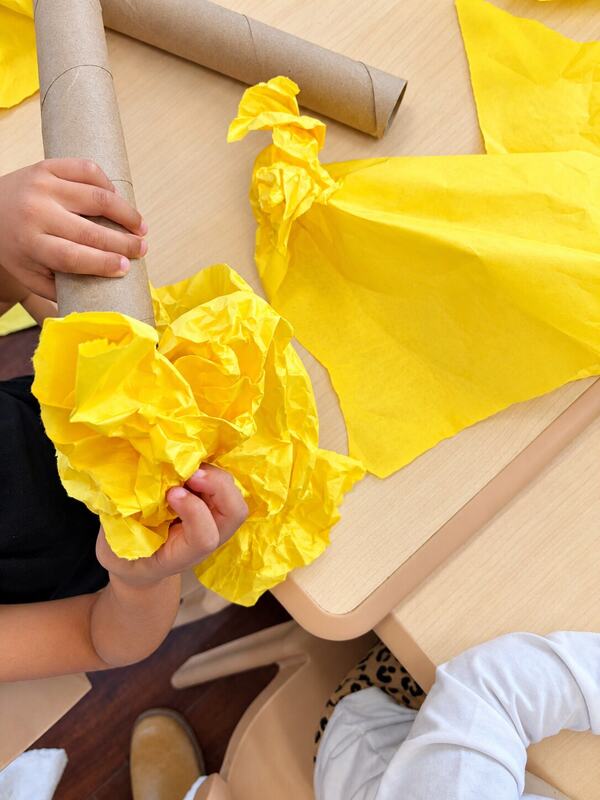
“The unhealthy plant was hungry!”
Once one child said it, everyone around the table started repeating it—and honestly, it was the perfect way to describe what was happening.
We had just read the story of Pharaoh’s dream from our children’s Bible. In this version, the plants are described as healthy and unhealthy. That language made sense to my almost-three-year-olds, but I wanted to give them something they could actually hold and explore while we talked about the story.
So I put cardboard tubes and yellow tissue paper in the middle of the table. The tubes represented the unhealthy plants, and the tissue paper represented the healthy plants. Then I let the children decide how to make the unhealthy plants “swallow” the healthy ones.
A Bible Activity Made From What We Already Had
This was one of those activities that looked incredibly simple—and it was. I did not need an elaborate setup or a table full of specialty materials.
- Cardboard tubes
- Yellow butcher paper
- A tray for each child
- Our children’s Bible
I tore some of the tissue paper into large pieces before the children arrived. I also left one long, continuous piece in the center of the table so they could tear pieces for themselves.
I offered all the materials at once, without showing them one “correct” way to complete it.
They All Solved the Same Problem Differently
This was my favorite part.
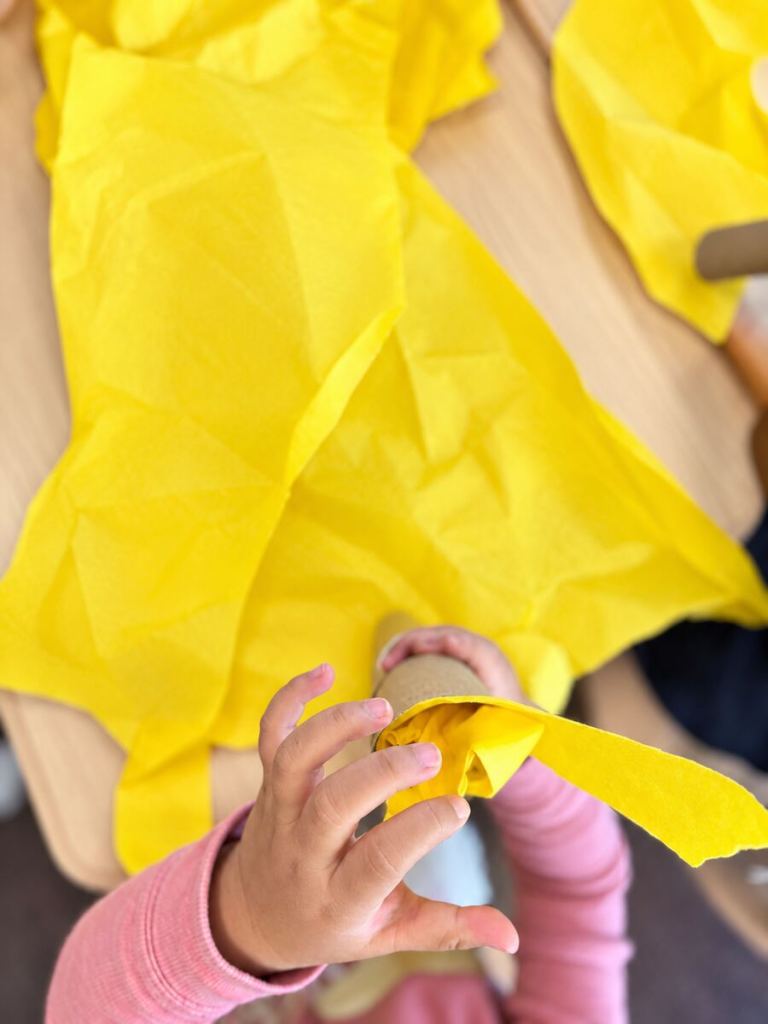
Some children pushed in one large piece. Some ripped the paper smaller so it would fit. Some crumpled it first. Others kept stuffing more and more inside until their tube was completely full.
They were all working with the same materials and the same story, but no two children approached it exactly the same way.
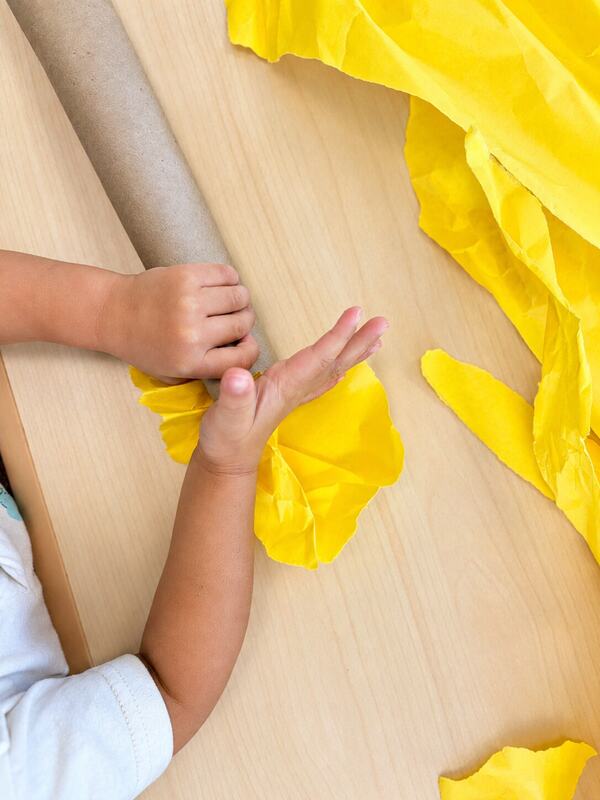
They stayed interested for about ten minutes as a group, and several children remained at the table even longer. That might not sound like much to an adult, but for children who are close to three, ten focused minutes spent remembering a Bible story, experimenting with materials, and solving their own little problems is meaningful.
“The Unhealthy Plant Was Hungry!”
As they worked, one child announced that the unhealthy plant was hungry. The phrase caught on immediately.
Soon they were feeding their plants, talking about which one was healthy and which one was unhealthy, and repeating what happened in Pharaoh’s dream. The cardboard tube was no longer just a cardboard tube. It gave them a tangible way to understand the strange image from the story: one plant swallowing another.
I love moments like this because I did not need to quiz them to find out whether they were listening. Their play showed me what they remembered.
There Was More Learning Here Than a Finished Craft
Nothing about this activity needed to look identical when it was finished. The learning was in what the children did along the way.
They were strengthening their hands as they ripped, crumpled, and pushed the paper. They were testing how much would fit inside the tube. They adjusted their plans when a piece was too large. They used story vocabulary naturally while they played. Most importantly, they were making sense of the Bible story in a way that felt appropriate for their age.
This is why I keep coming back to hands-on Bible activities with young children. A simple material can turn an unfamiliar part of a story into something they understand, remember, and want to talk about.
Try the Full Pharaoh’s Dream Preschool Unit
This activity is included in my Pharaoh’s Dream + Farm preschool Bible unit, along with more hands-on Bible and farm-themed invitations designed for young children.
If you try this activity, pay attention to the words the children use while they play. “The unhealthy plant was hungry” was not a sentence I planned for them—but it told me they were making the story their own.
Explore the Pharaoh’s Dream + Farm Preschool Bible Unit
Want more hands-on Bible invitations? The full bundle includes this Pharaoh’s Dream unit along with Joseph, Tower of Babel, and additional preschool Bible lessons.

