The first thing that comes to mind when I think about bats is Stellaluna.
I remember reading it as a child, and that is honestly where most of my experience with bats began. I have never done an entire bat theme in my classroom. But when I started working on this bat science center, that book kept popping back into my head.
I think that is because Stellaluna makes bats feel less like a “spooky” animal and more like something children can be curious about. They can wonder why bats sleep upside down, how they fly, what their wings feel like, or what a baby bat looks like.
You also do not need to plan a full week of bat activities. A book, a few pictures, and a tray of materials are enough to get the conversation started.
Start with a story and see what they notice
I would start by reading Stellaluna or putting it near the science area with a few nonfiction bat books. Then I would ask the children what they already know about bats and what they want to know.
Their answers do not have to be correct. This is just the starting point. One child might be interested in the wings. Another might want to know where bats live. Someone else may only want to tell you that bats come out at night. All of those responses give you somewhere to go next.
Look closely at the parts of a bat
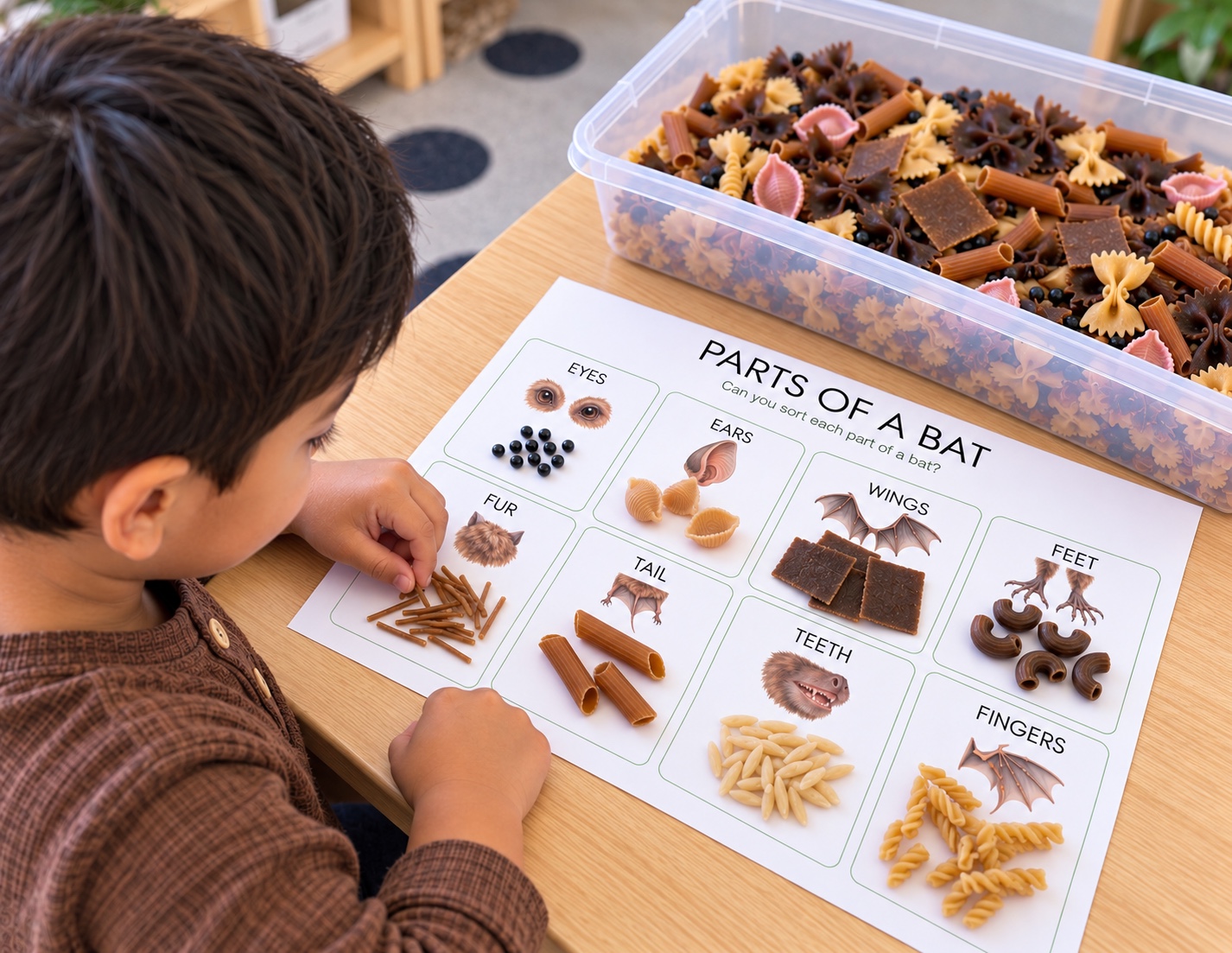
Bats are one of those animals that give children plenty to look at. They have fur and teeth like other mammals, but they also fly. Their wings even have fingers inside them.
I would set out the parts-of-a-bat mat, the matching cards, and a small bowl of pasta pieces. The children could match the pieces to the picture, move them around, or simply look at the mat while they talk about what they see.
You do not have to explain every part before they begin. I would keep the questions simple:
- What do you notice?
- Where do you think this piece could go?
- What is different about a bat’s wing?
- What do you think the bat uses this part for?
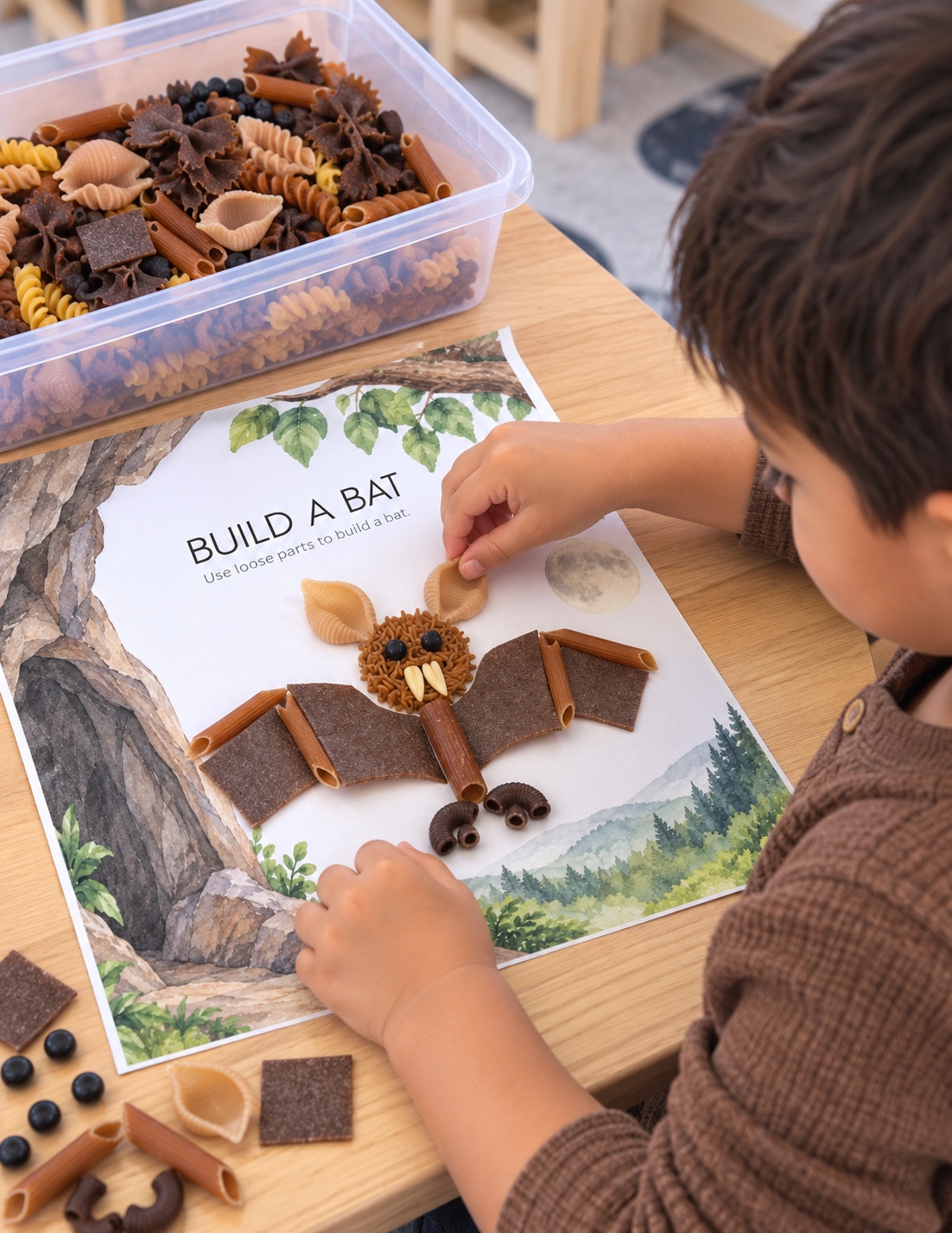
Let them build their own bat
After looking at the bat together, I would leave the mat out with pasta and other loose parts and let the children build.
There is no reason every bat needs to look the same. One child may carefully copy the picture. Another may give the bat five wings, a giant tail, or something that was not on the mat at all. I would want to hear what they made and why they chose it.
That is what I want these printables to do. The printable provides the spark; the children decide where it goes.
Add the bat life cycle
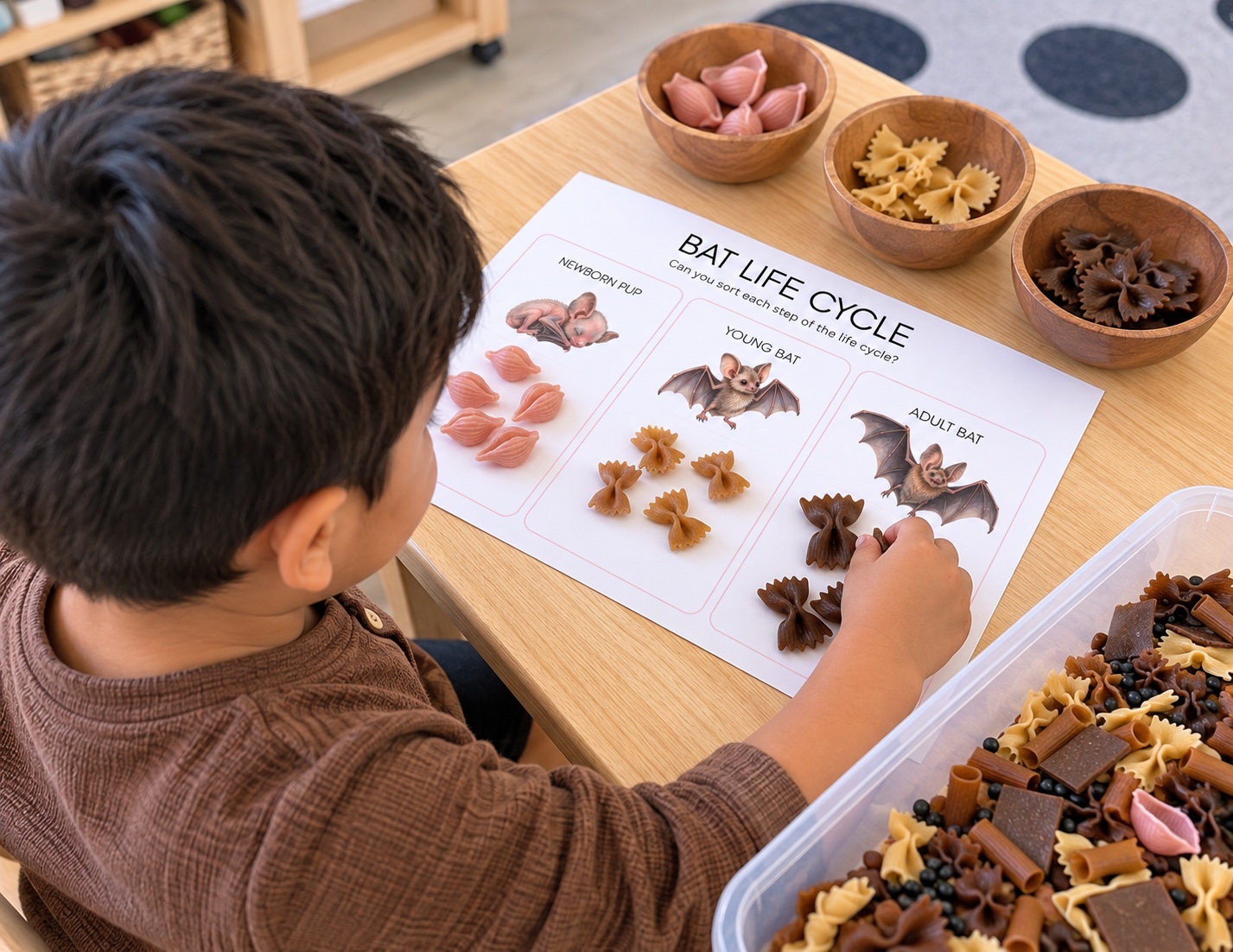
A baby bat is called a pup, which is a fun new word to introduce. The life-cycle activity moves from newborn pup to young bat to adult bat.
Children can put the stages in order, match pasta to each stage, or tell you what they think is happening in the pictures. I would ask, “What changed?” and give them time to really look before jumping in with the answer.
Keep the vocabulary nearby
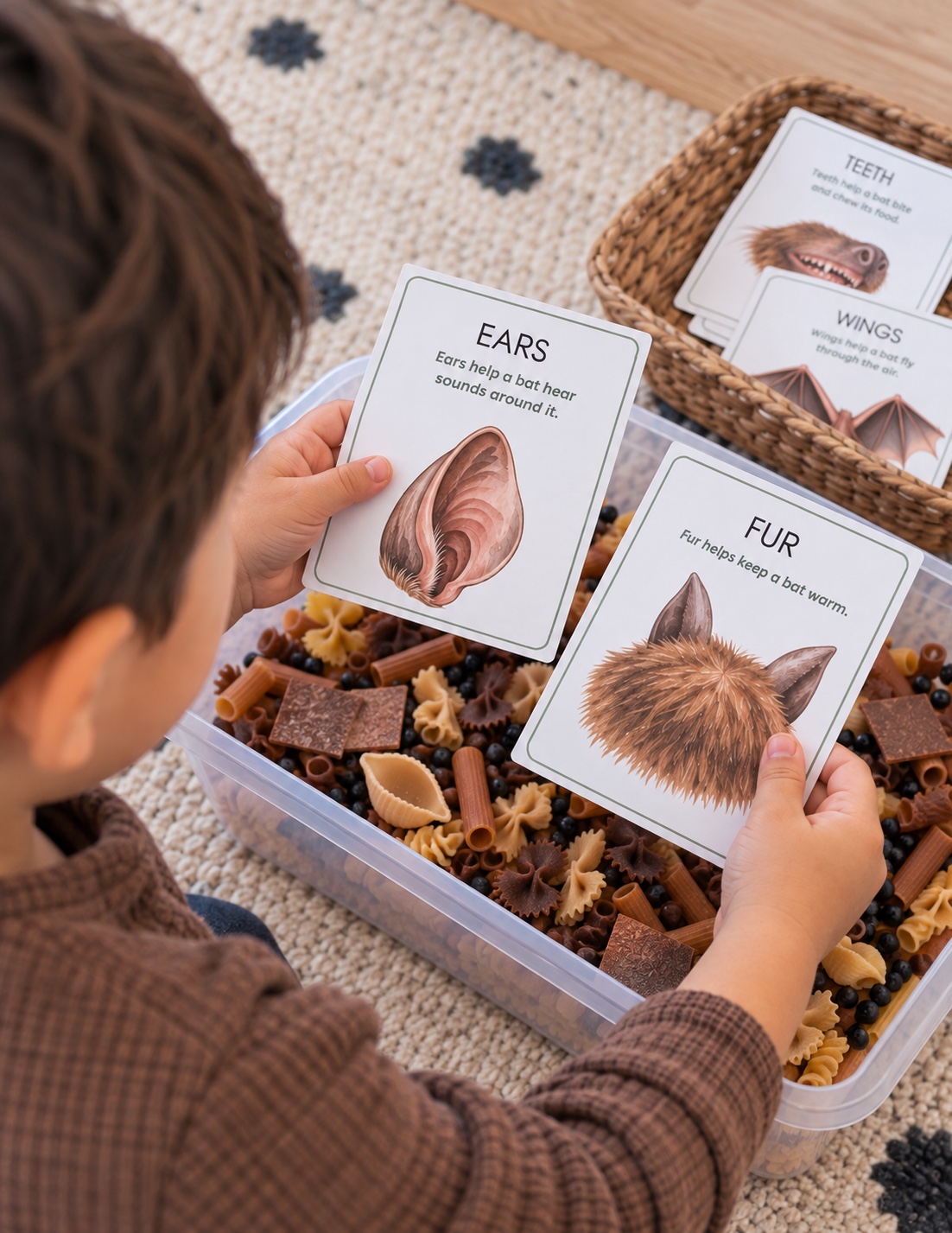
I would not sit down and try to teach every vocabulary word at once. I would keep the cards beside the activity so the words are there when the children need them.
If a child points to the wing, you can look for the wing card together. If they notice the teeth or ears, you have the word ready. The vocabulary becomes part of what they are already doing instead of another lesson they have to sit through.
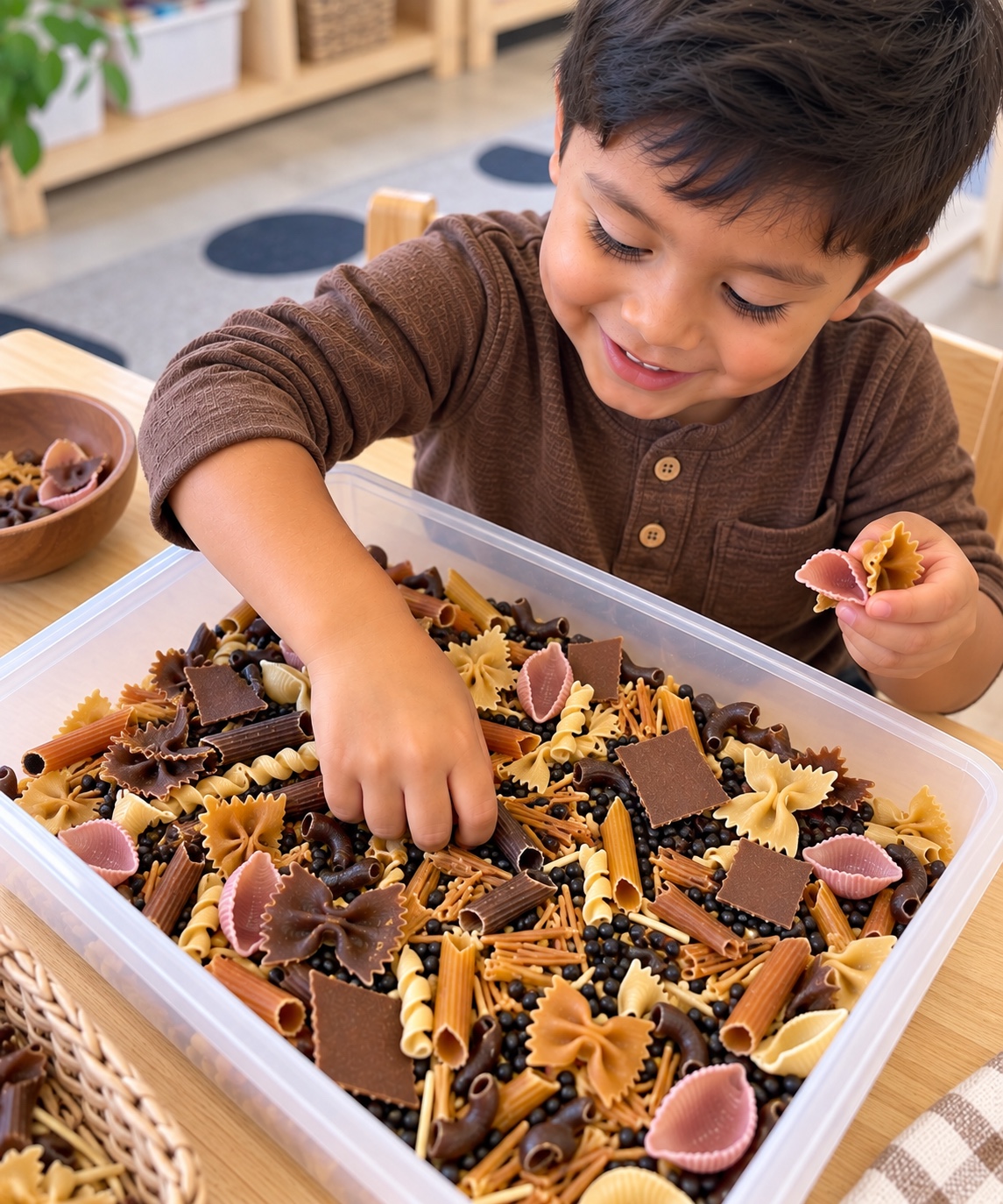
Or put it all into a sensory bin
If you want to extend the activity, the cards and pasta pieces can go into a sensory bin. Add scoops, bowls, containers, and a few bat figures if you have them.
The children might hunt for the life-cycle pieces, sort the pasta, build a home for the bats, or completely change the plan. That does not mean the activity went wrong. It means the materials gave them an idea of their own.
A simple bat activity is enough
This does not need to become an elaborate classroom transformation. You could read one book and place the building mat at the science table. You could add the life cycle another day. You could put everything into a sensory bin and let the children decide how to use it.
Start small, listen to what they are talking about, and add more only if the interest is there.
Bat science center printables
If you would like the pieces ready to set out, the Bat Life Cycle & Parts of a Bat Play Beyond Pasta Science Center includes the parts-of-a-bat activity, life-cycle pieces, vocabulary cards, and open-ended building prompts.
Use the parts that fit your classroom, leave out the ones that do not, and let the children show you where the activity should go next.

