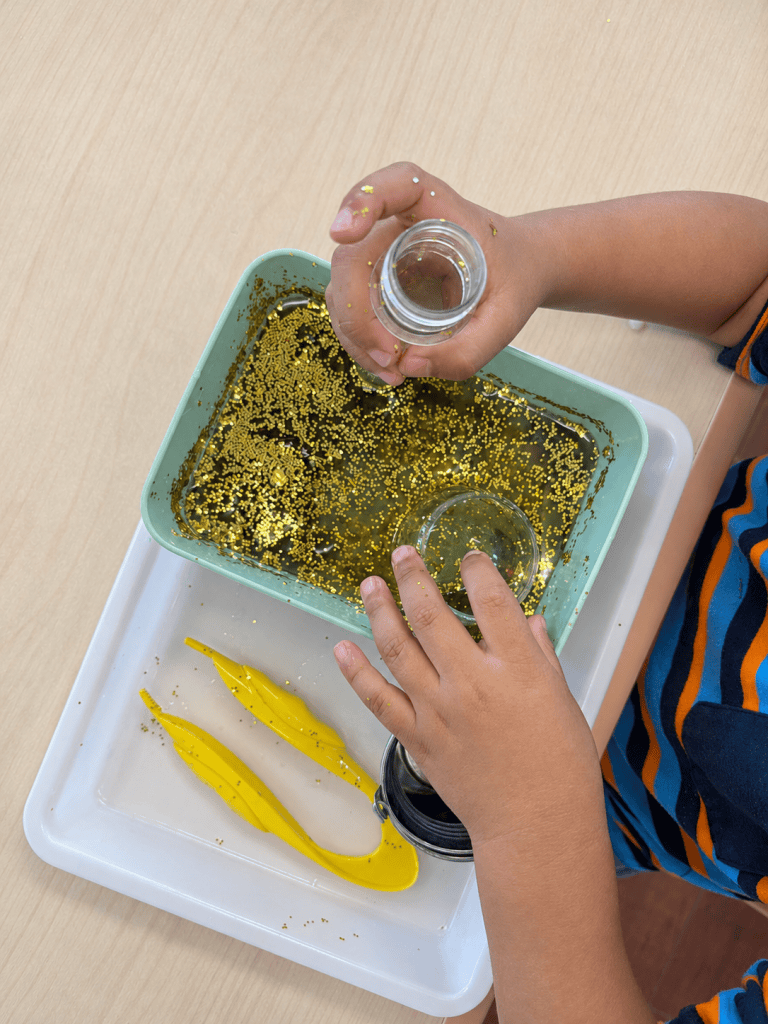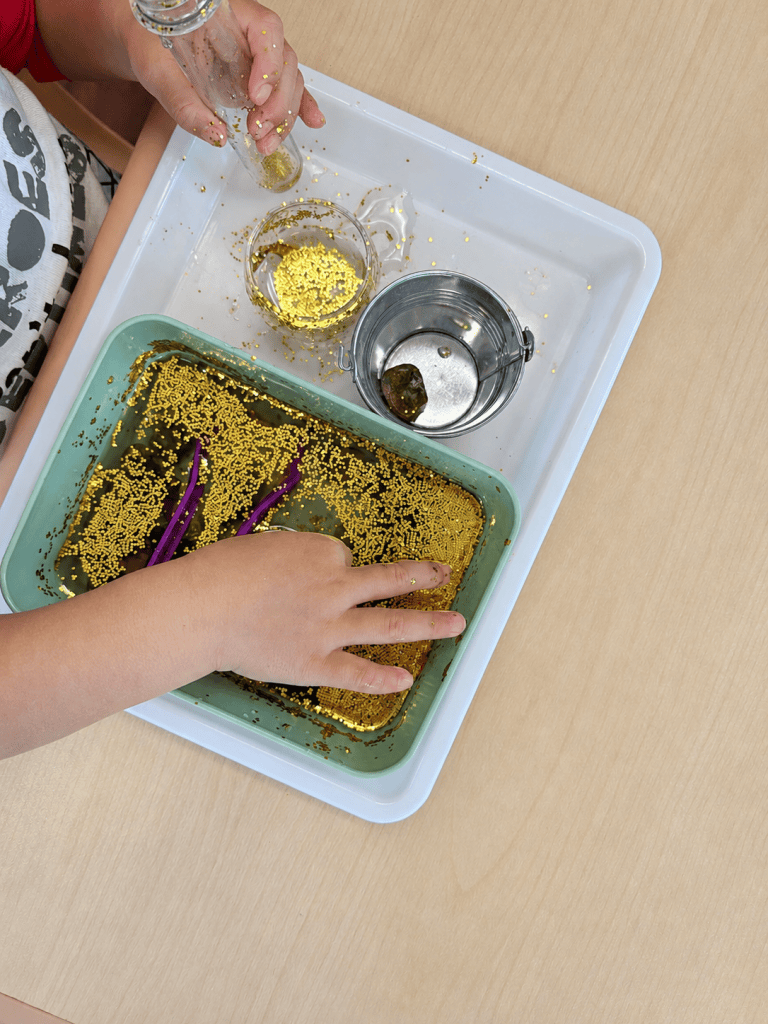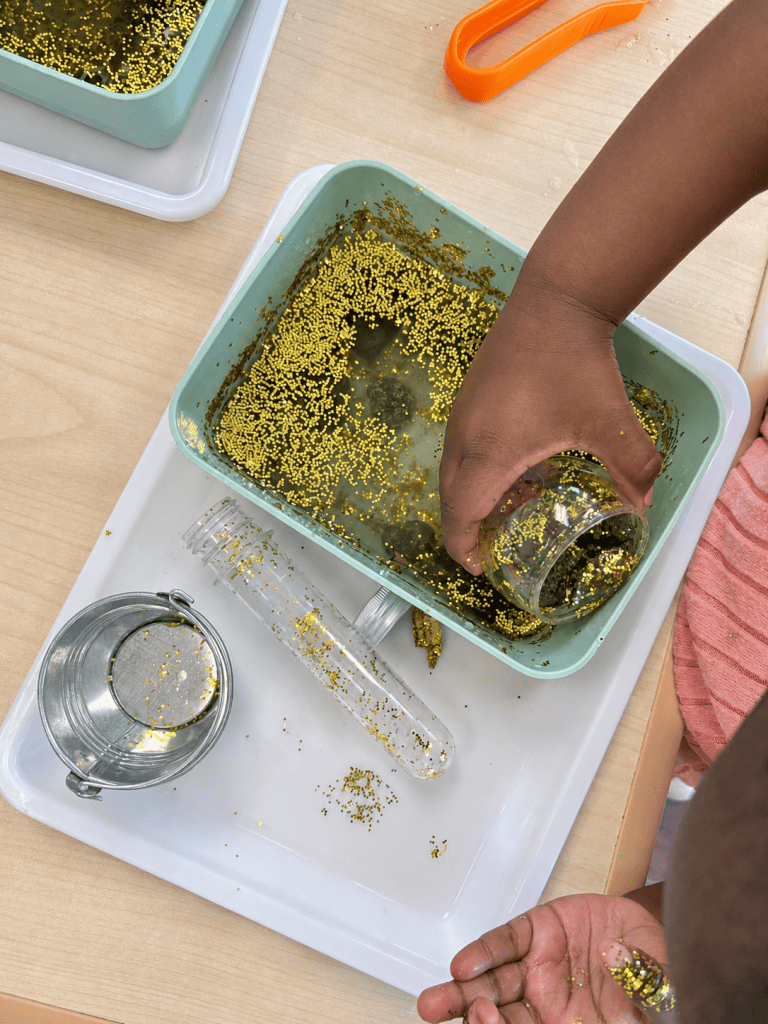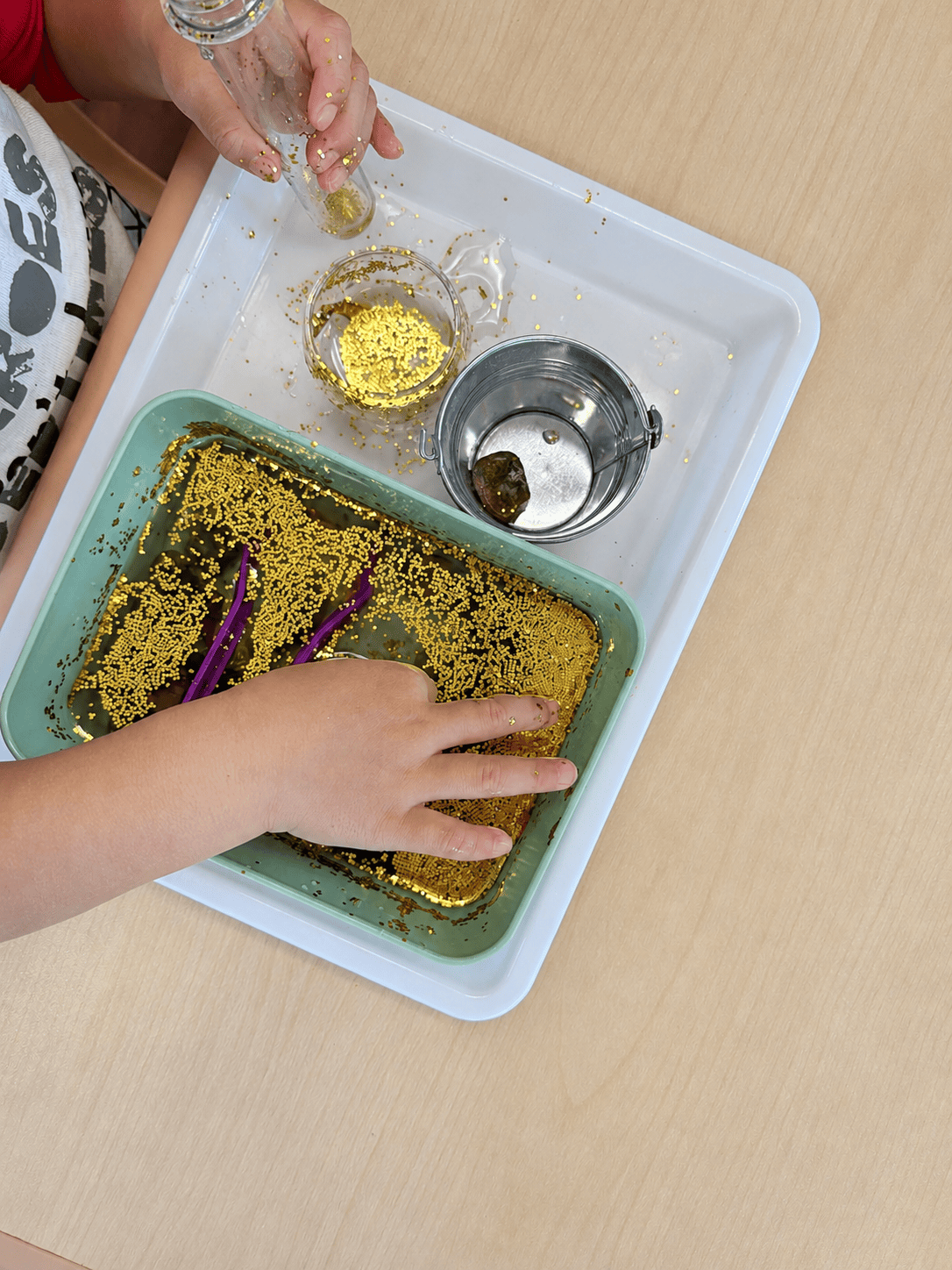
Of all the things going on at our pretend gold panning tray, I kept coming back to one little moment. A preschooler used the jumbo tweezers to pick up a wet rock, and I’d never seen her handle them with that much control before. There was plenty to watch between the swirling glitter and the bucket filling up with rocks, but that’s the moment I’m still thinking about.
What I put out for pretend gold panning
I started with a shallow tub of water, gold glitter, and rocks. I set it on a tray with jumbo tweezers, clear vials, and a little metal bucket so the children could reach for whichever tool or container they wanted. Once they got going, those containers became part of the play, too.
“I got it!”
“I got it!” and “Look at that, amazing!” were two of the things I heard around the tray. When the children started putting rocks in the clear vials, I heard, “That’s a good idea.” They were watching what was happening in the water, too. As the glitter moved around, I kept hearing the same description: “So swirly.”
If I set the tray out again, I’d start with a simple question: What can you find in the water, and how might you pick it up? From there, the materials give the children plenty to figure out. A rock that drops right into the bucket might be too wide for a vial, and a scoop of water can come up sparkling even when there’s no rock in it.
What I noticed when I stepped back
That little moment with the tweezers stayed with me because there’s a lot happening in one motion. She had to open the tips wide enough to get around the rock, then hold them steady enough to lift it without losing her grip. She had a rock she wanted to pick up, and that gave her a reason to work out how to use the tool. Watching her do it gave me a better sense of what she could already do on her own.
Stepping back also gave me a chance to hear how the children were responding to one another. When I heard “That’s a good idea,” I got to see how something as small as adding a rock to a vial could give someone else an idea for what to try next.
Questions I’d keep in my back pocket
I’d give them time with the tray before asking another question. If a child wanted help picking something up, I might ask which tool they’d like to try. If they were drawn to the glitter, I might ask what happens when they give the water another swirl. Sometimes I’d just move the bucket a little closer so a child with a rock that won’t fit in a vial can decide where it goes.
Where this fits in our rivers and water theme
Panning for Gold is one of the water explorations in my Play Beyond the Story: Baby in a Basket unit. The Bible activities explore the story of baby Moses, and the companion rivers and water theme gives children more ways to investigate water through play.
Explore the Baby Moses Bible Lesson and Water Theme on Teachers Pay Teachers