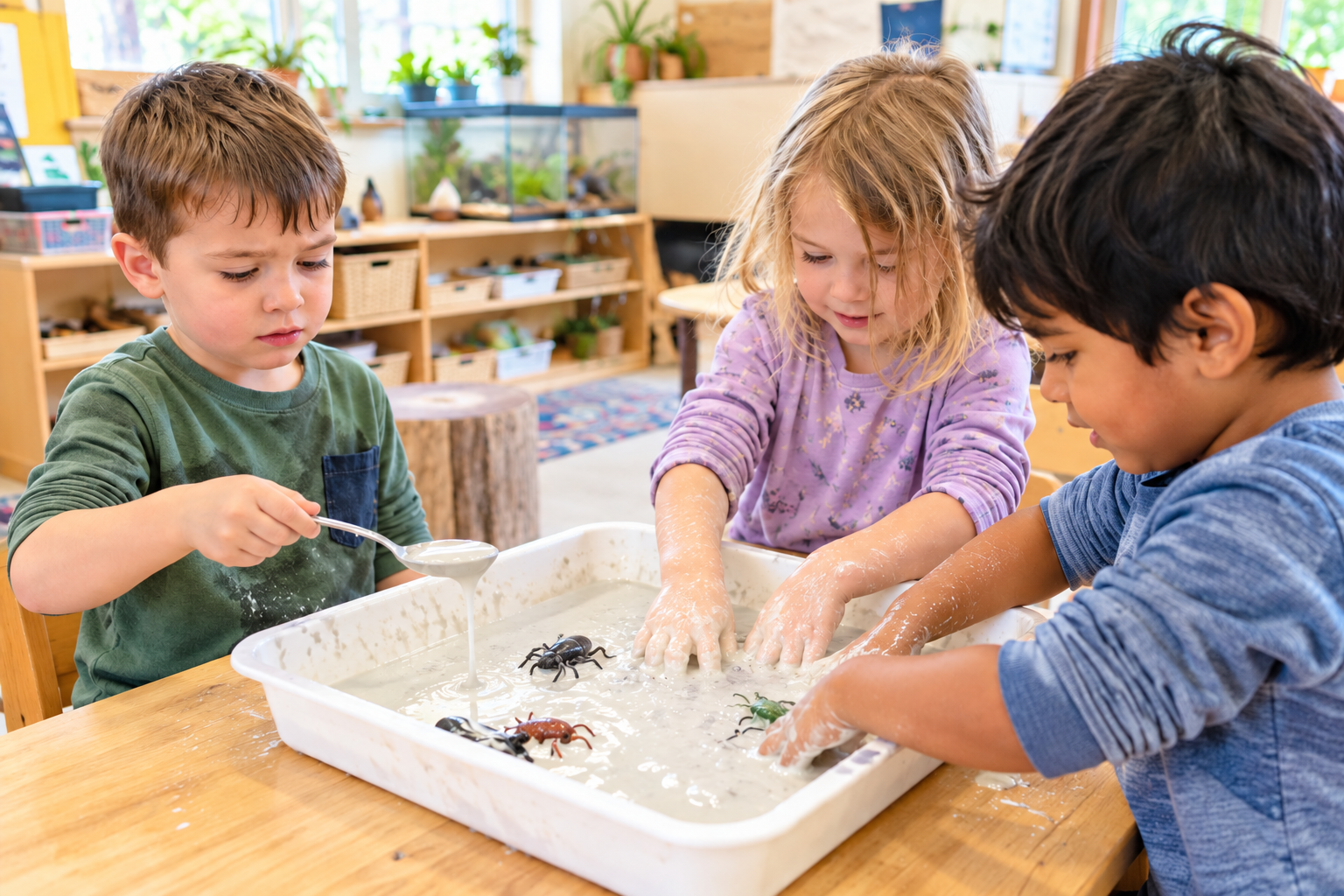
The first time I offered one of my students oobleck, he wanted absolutely nothing to do with touching it.
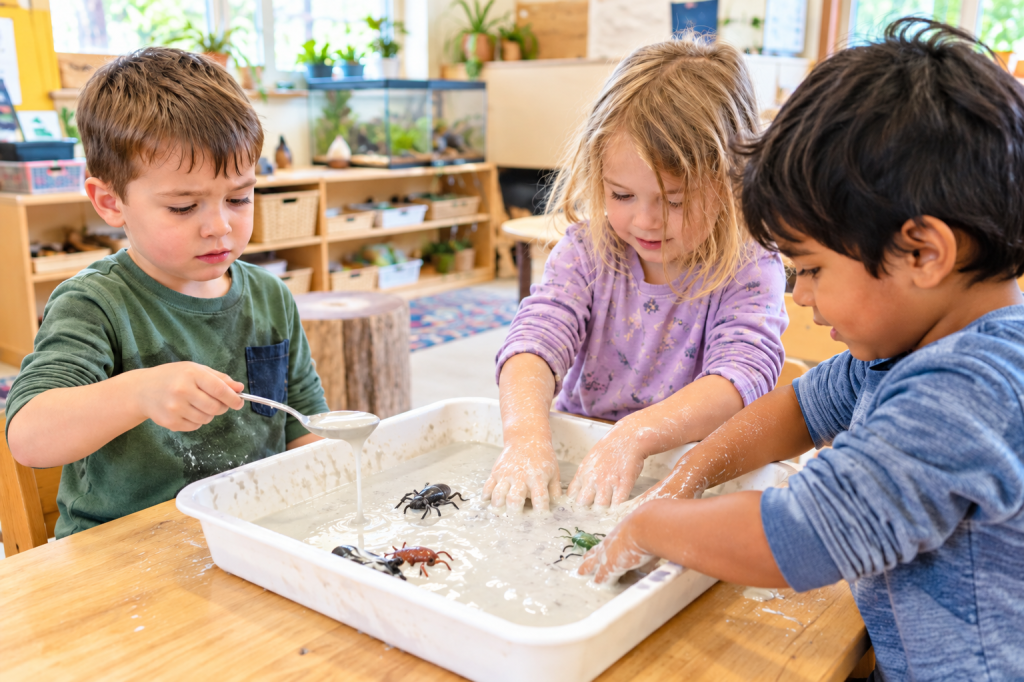
We were using cornstarch and water as pretend mud for toy bugs. It was messy, strange, and exactly the kind of sensory activity most of the children could not wait to put their hands into.
But not this child.
I gave him a spoon so he could participate without touching the oobleck. Eventually, he reached out and tapped it with the very tip of one finger. That was it. He spent the rest of the activity sitting near the other children and watching.
I did not make him touch it again. I did not put his hand into it or keep asking if he was ready.
He had tried it. For that day, that was enough.
Sometimes “no” means “I’m not ready yet”
Oobleck is a big one for children who are hesitant about sensory play. It looks wet but can feel firm. It drips through their fingers and then suddenly becomes difficult to squeeze. Even children who happily play with water, sand, or playdough may be unsure about it.
Shaving cream and cooked spaghetti can get the same reaction. Some children are uncomfortable with the texture. Others are more worried about the mess.
Many times, the first thing they ask me is not whether the material is safe. They want to know whether they are allowed to touch it.
They are worried about their clothes. They are worried about getting their hands dirty. Sometimes they are genuinely worried that an adult will be upset with them.
That is when I tell them:
“It’s okay to touch it, honey. Look at Miss Lindsay. See? It’s okay if we make a mess. We can clean it later.”
If they are looking down at their clothes, I reassure them, “It’s okay. Mommy can wash it later.”
Sometimes I have to say the part they really need to hear:
“You won’t get in trouble. You’re allowed to touch it.”
Show them instead of repeatedly asking
I do not stand beside a hesitant child and continue asking, “Do you want to touch it now?”
That can turn an invitation into pressure very quickly.
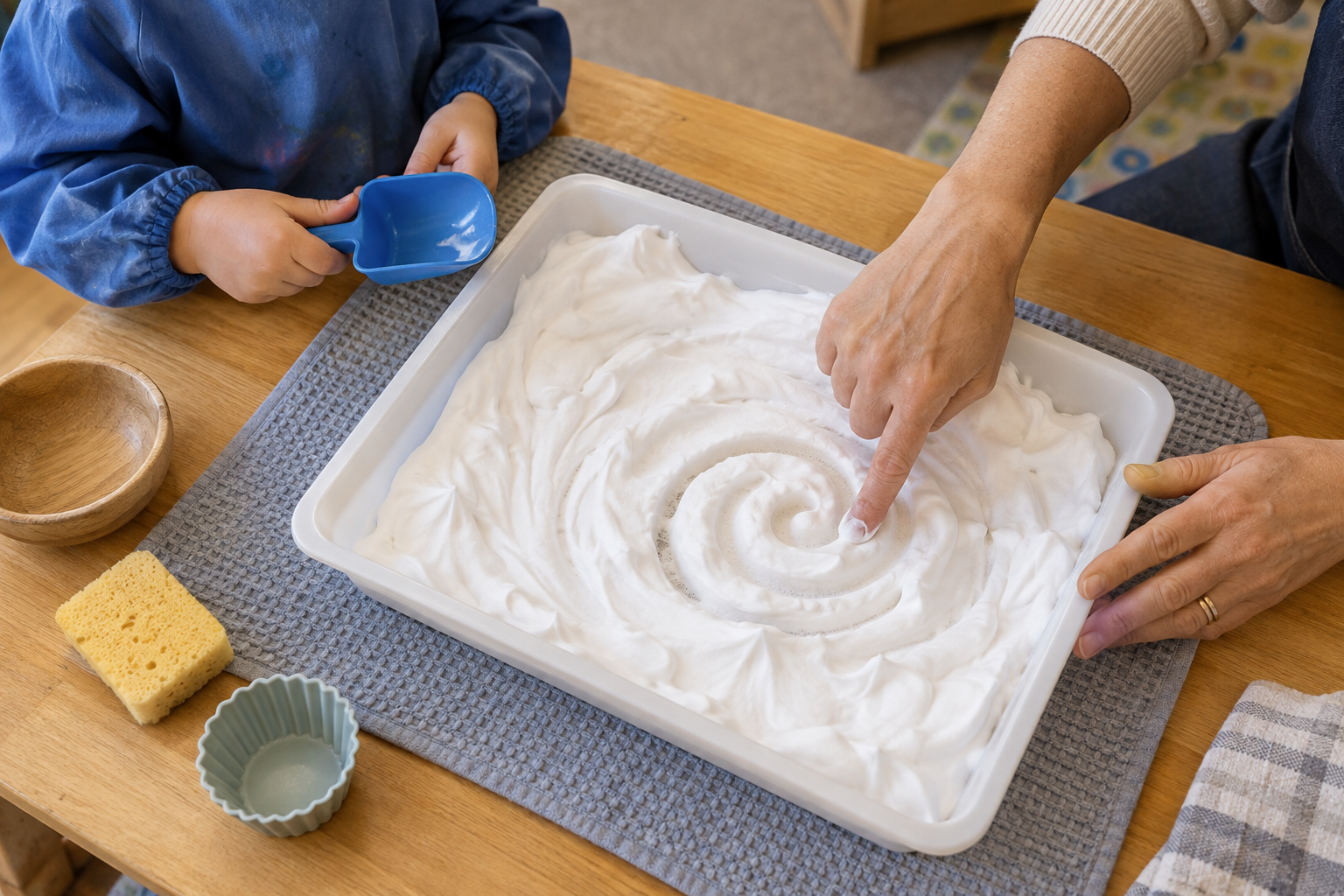
Instead, I put my own hands into the material. I play beside the children. I let them see that I am comfortable, that the mess is allowed, and that nothing bad happens when shaving cream gets on our fingers or pretend mud drips onto the table.
One shaving-cream activity went so far beyond my original plan that a child called it the best preschool day ever.
Sometimes I will offer to help:
“Do you want me to hold your hand and touch it with you?”
If they say yes, we try it together. If they say no, I say, “Okay,” and continue playing with the rest of the group.
The activity stays available, but the pressure disappears.
Give them another way to participate
Touching the material with bare hands should not be the price of joining the activity.
A spoon, scoop, paintbrush, cup, pair of tongs, or toy can give a hesitant child a comfortable place to begin. They can stir the oobleck, bury a bug with a spoon, push spaghetti around with a utensil, or spread shaving cream with a brush.
Using a tool is not “avoiding” sensory play. It is often the bridge that helps a child feel safe enough to move closer.
A child may use the tool for the entire activity. That is okay. They are still observing the material, noticing how it moves, and participating alongside the group.
Let the other children do some of the convincing
Sometimes the most helpful thing I can do is stop trying to convince the child.
I keep engaging with the children who are ready. We laugh, explore, and make a gigantic mess. The hesitant child gets to watch without everyone focusing on them.
Most of the time, curiosity eventually wins.
They see how much fun everyone else is having. They move a little closer. They touch the material with a tool, then one finger, and sometimes—when they are ready—they put both hands in.
When that happens, I celebrate it.
“You touched it! I’m so proud of you for trying something new. Do you like it?”
I am not praising them for obeying me. I am celebrating the courage it took to try something that felt uncomfortable.
Progress may show up during the next activity
The little boy who barely tapped the oobleck did not suddenly immerse both hands in it that day.
But later, we did a shaving cream activity.
This time, his hands were completely covered.
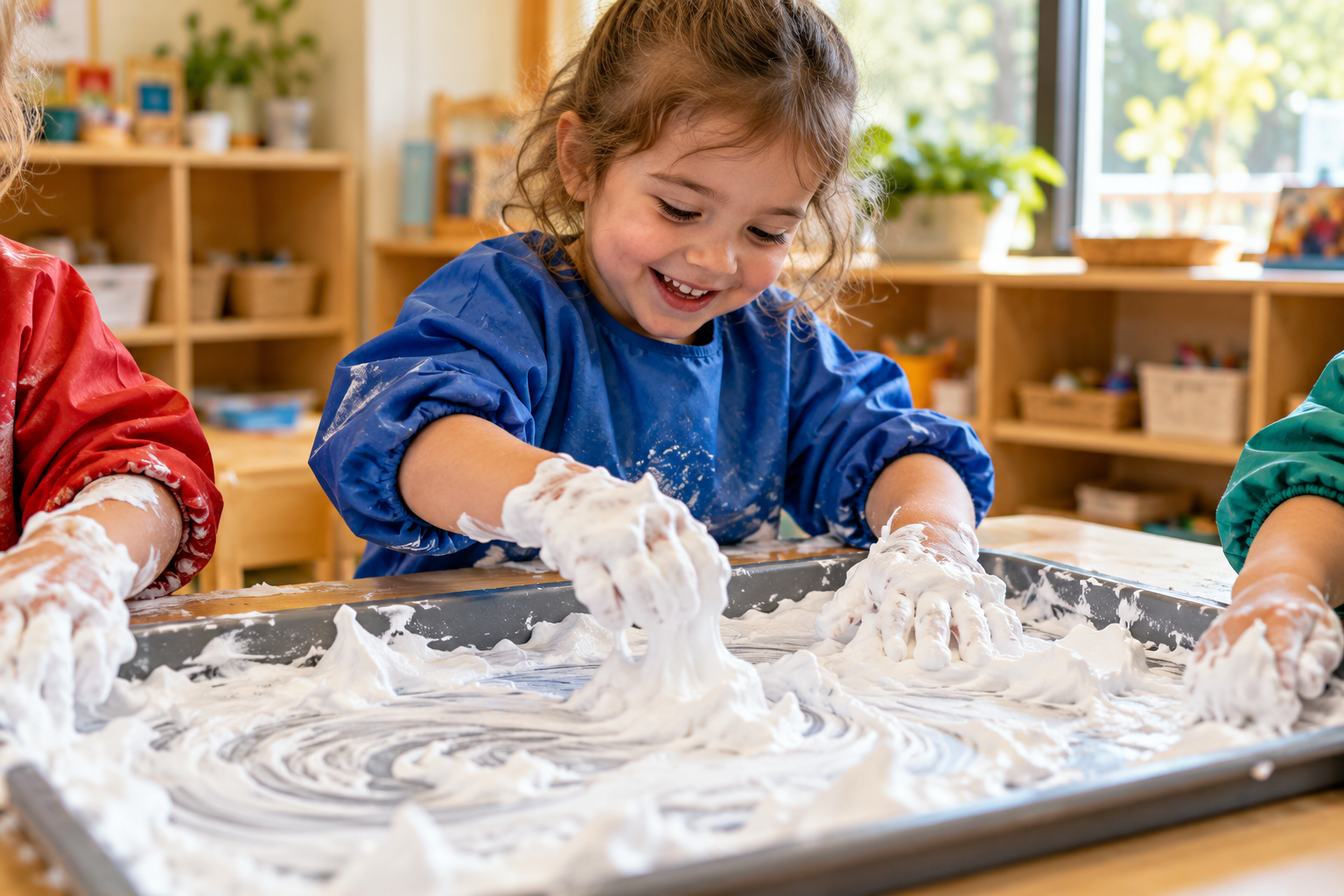
He went from one tiny finger touching pretend mud to fully immersing himself in a different sensory material. The first activity had not failed. He had been watching, learning, and deciding whether these messy experiences were safe.
He simply needed more time than the activity allowed that day.
That moment reminded me that we do not always get to see the result immediately. A child may spend an entire sensory experience watching. What looks like “doing nothing” to us may actually be the child gathering the confidence they will use next time.
Invitation does not mean expectation
Sensory play should be an invitation, not a test every child must pass.
Model the experience. Reassure the child that the mess is allowed. Offer a tool or your hand. Then give them enough space to make their own decision.
That balance—protecting the child while leaving room for their own choice—is also at the center of Just Let Them: Why Preschoolers Need the Freedom to Get Messy.
If they touch it, celebrate their courage.
If they do not, let them watch.
One finger today may become two shaving-cream-covered hands another day.
The preschool-teacher book I’m writing is filled with real classroom moments like this—small changes that happened when I stopped pushing for the result and paid closer attention to the child in front of me.

