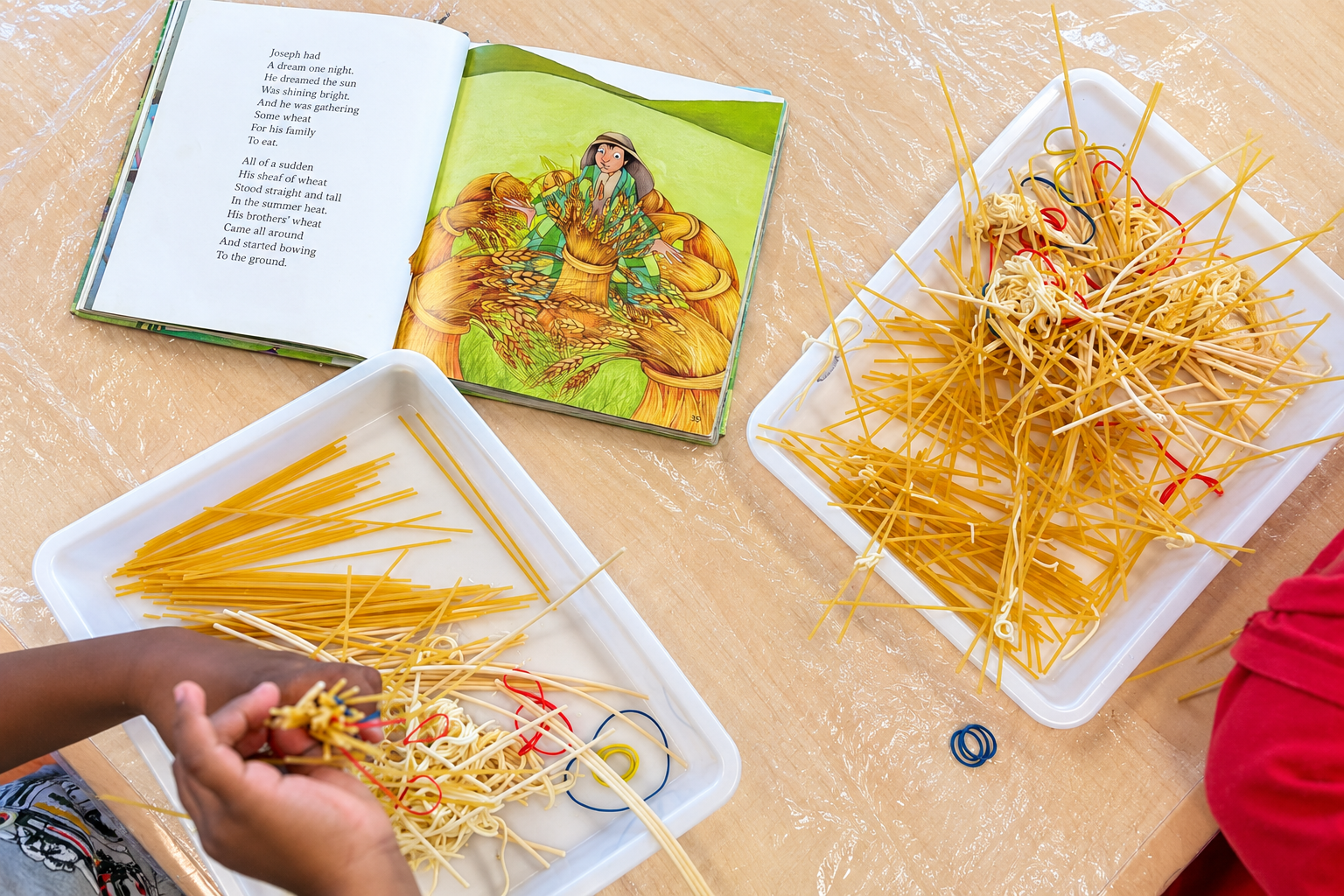
I knew this activity had caught their attention when it was almost time for lunch—and no one wanted to leave the table.
My class is made up of children who are close to three or have only recently turned three. Thirty-five minutes is a long time for them to stay with one activity, especially when they are free to move on whenever they are ready. But they kept gathering spaghetti, wrapping it into bundles, bending it, standing it up, and making it bow.
Eventually, I had to be the one to end the activity so we could clean up for lunch.
The best part was not simply that they enjoyed it. It was what they remembered afterward.
Turning Joseph’s dream into something they could touch
We had been learning about Joseph and his brothers using The Rhyme Bible Storybook by L. J. Sattgast.
In the story, Joseph dreamed that he and his brothers were gathering bundles of grain. Joseph’s bundle stood upright while his brothers’ bundles bowed down to it.
That can be a difficult image for very young children to understand through words alone. Most of my children have never gathered grain into bundles—and “bowing wheat” is not exactly part of their everyday experience.
For this activity, I placed three kinds of spaghetti on each child’s tray:
- Uncooked spaghetti
- Partially cooked spaghetti
- Fully cooked spaghetti
I also provided bands they could use to gather the strands into bundles.
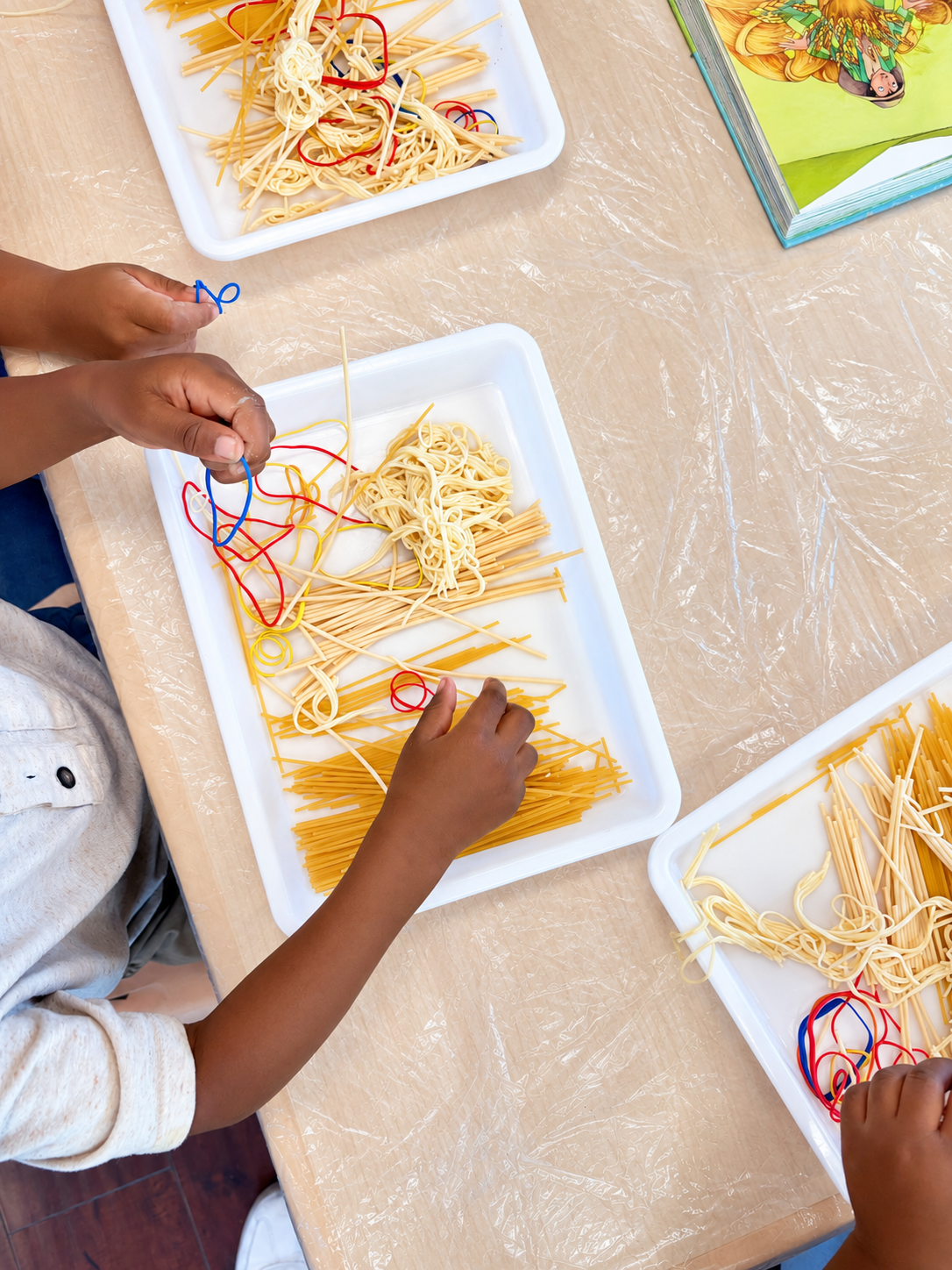
The different textures gave them several ways to explore the idea. The uncooked spaghetti could stand tall but broke when bent too far. The cooked spaghetti flopped and bowed. The partially cooked pieces fell somewhere in between.
I did not need to show them one correct way to build a bundle. They gathered, wrapped, bent, balanced, compared, and rearranged the pieces in their own ways.
Want the complete Joseph and His Brothers preschool Bible unit?
“The spaghetti was the wheat!”
After they had time to explore, we talked about Joseph’s story again.
They were able to tell me that the spaghetti represented the wheat and that it bowed down. They remembered that Joseph’s brothers were mad and threw him down a well—which is apparently everyone’s favorite part of the story. They also remembered that Joseph was taken away and that his coat was full of colors.
These children are barely three.
They were not repeating a line they had memorized for me. They were connecting something they had heard in the story with something they had touched, moved, bundled, and watched bow in their own hands.
That tangible connection gave the story somewhere to land.
What the children discovered through play
This was a Bible activity, but so much additional learning happened naturally while they played.
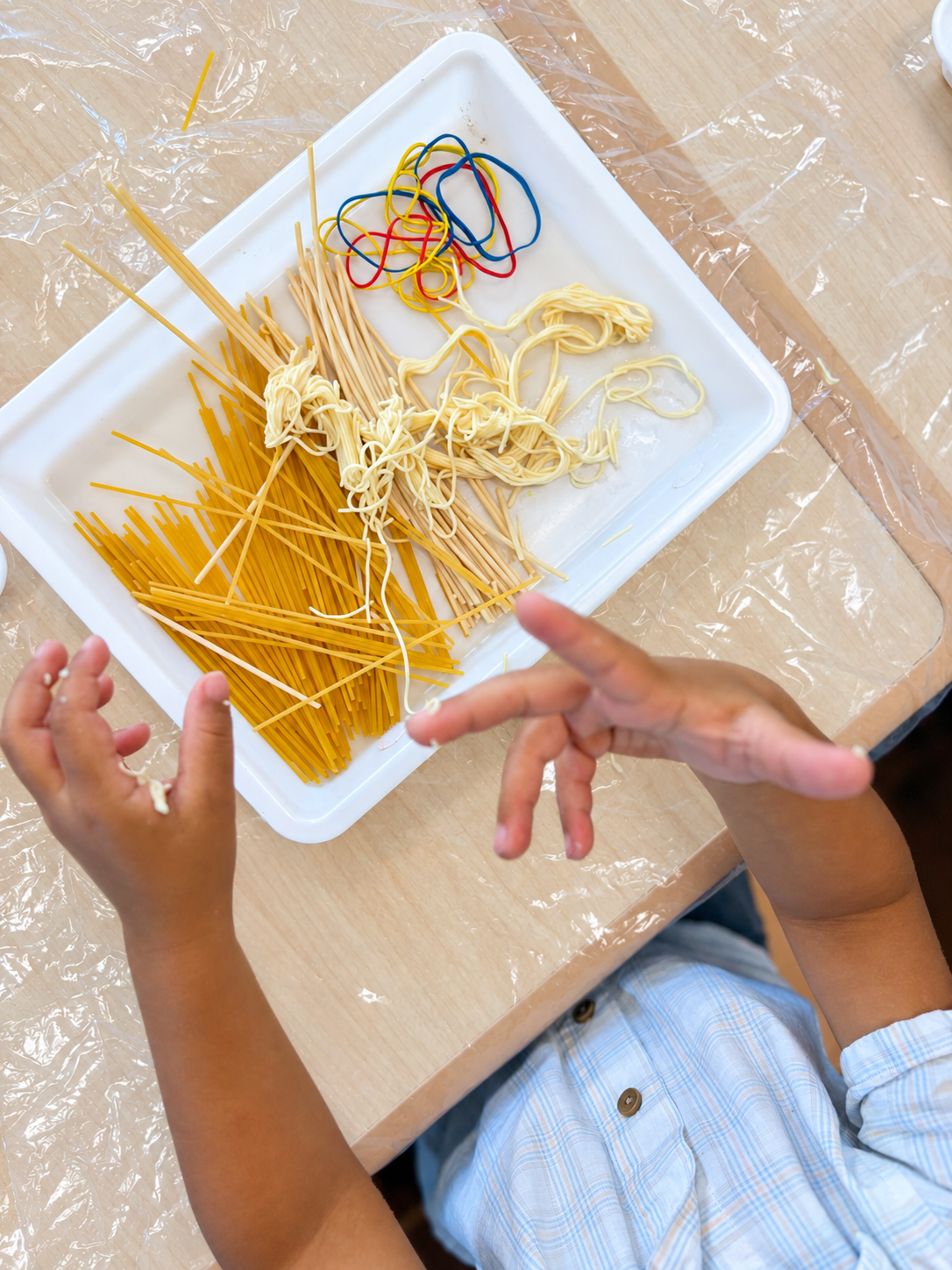
They compared textures and noticed how cooking changed the spaghetti. They experimented with balance, flexibility, movement, and cause and effect. They worked their fingers to gather slippery strands and stretch bands around their bundles. They made adjustments when something would not stand or bend the way they expected.
Most importantly, the activity left room for them to think.
There was no finished project everyone needed to copy. One child’s bundle could stand. Another could bend. Another could completely collapse—and each result gave us something new to notice and discuss.
A simple setup with a meaningful result
This activity did not require an elaborate classroom transformation or expensive materials. It was spaghetti, bands, trays, and a story we were already reading.
But for 35 minutes, my children were completely invested.
They were able to explore a part of Joseph’s dream that would otherwise have remained very abstract. When we returned to the story, they had their own experience to connect it to.
That is exactly what I want from Bible learning in preschool. I do not want children to simply sit through a story and move on. I want them to touch it, wonder about it, talk about it, and carry pieces of it into their play.
Try the complete Joseph preschool Bible unit
The Grain Dream Spaghetti Exploration is one of the hands-on activities included in my Joseph and His Brothers: Coat of Many Colors Preschool Bible Unit.
The unit combines the Bible story with open-ended, play-based activities designed for young children. Rather than relying on worksheets, the activities give children meaningful ways to explore the story through sensory play, movement, building, color, and conversation.
Bring Joseph’s story to life with hands-on activities created for preschoolers.
Sometimes the simplest materials create the connection children remember most. For my class, a few trays of spaghetti turned Joseph’s unusual dream into something they could understand—and a story they could tell back to me.

