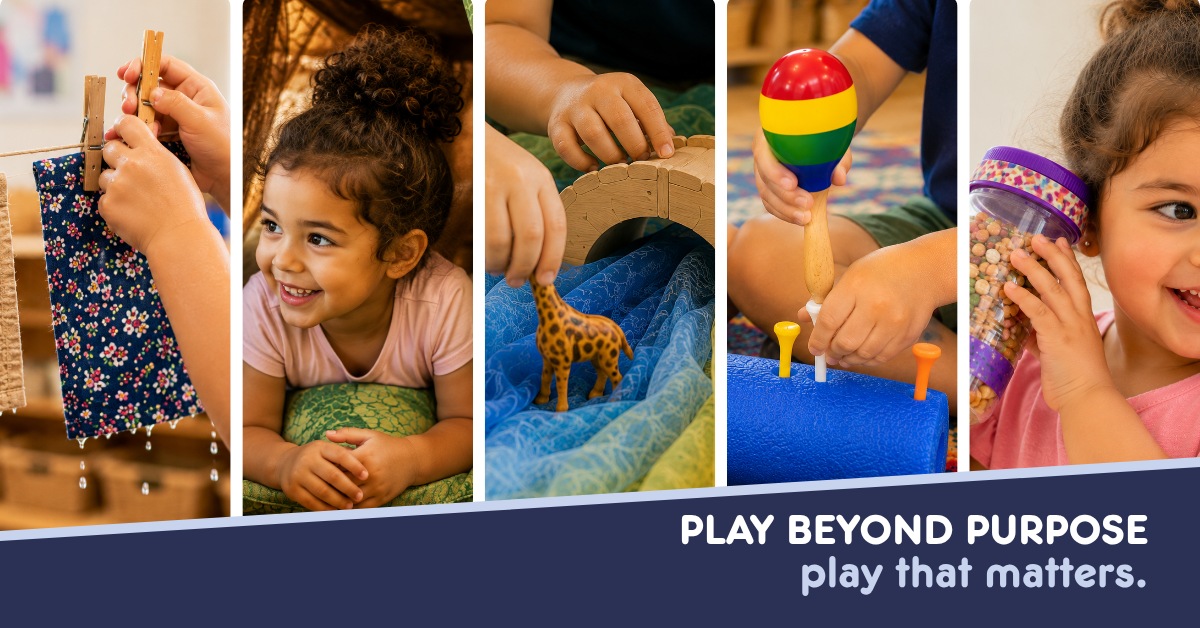
If you’ve ever found yourself searching for new preschool activity ideas, wondering how to encourage more open-ended play, or looking for ways to move beyond worksheets and crafts, you’re not alone. Many early childhood educators believe in play-based learning but struggle to find practical ways to implement it in the classroom. That’s exactly why I created the Play Beyond Purpose series—a collection of child-led, open-ended activities that transform everyday objects into meaningful learning experiences.
But before I tell you about the series itself, let me tell you how it all started.
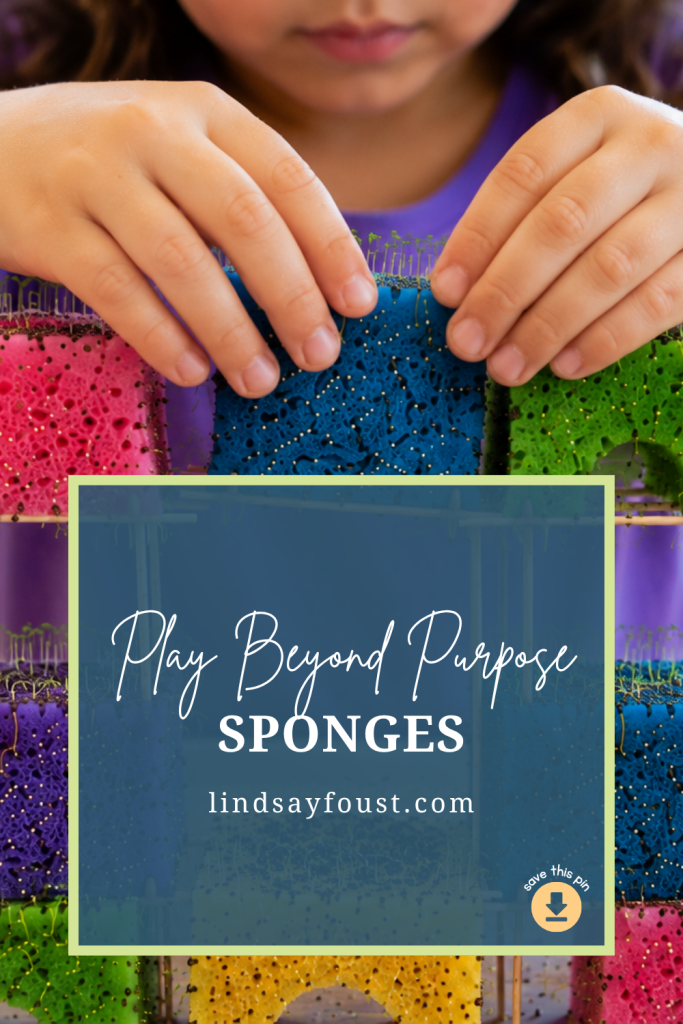
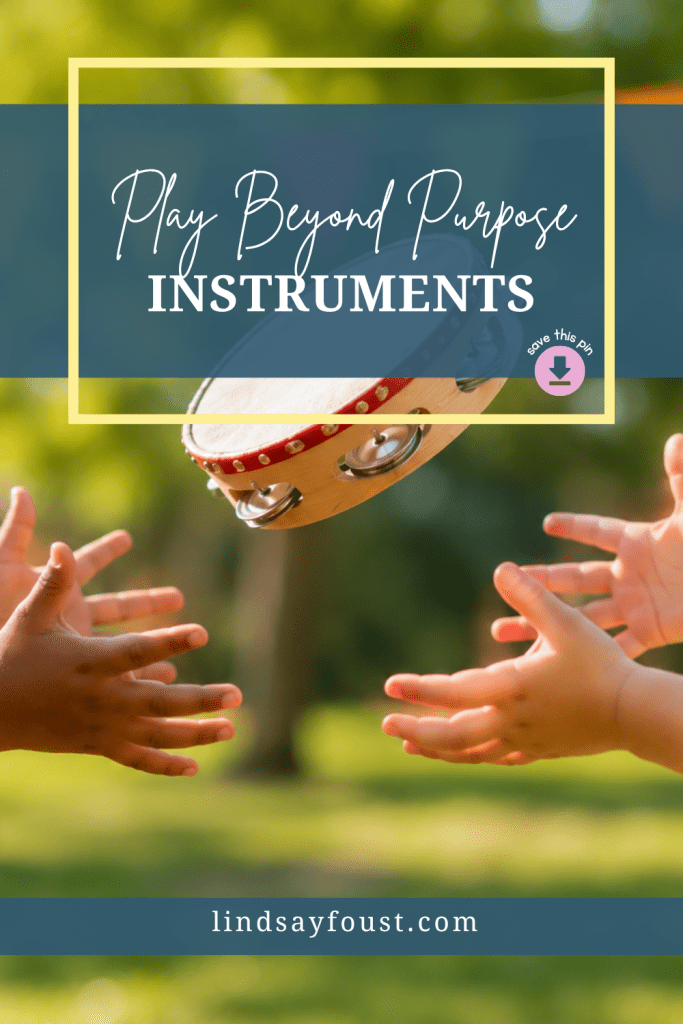
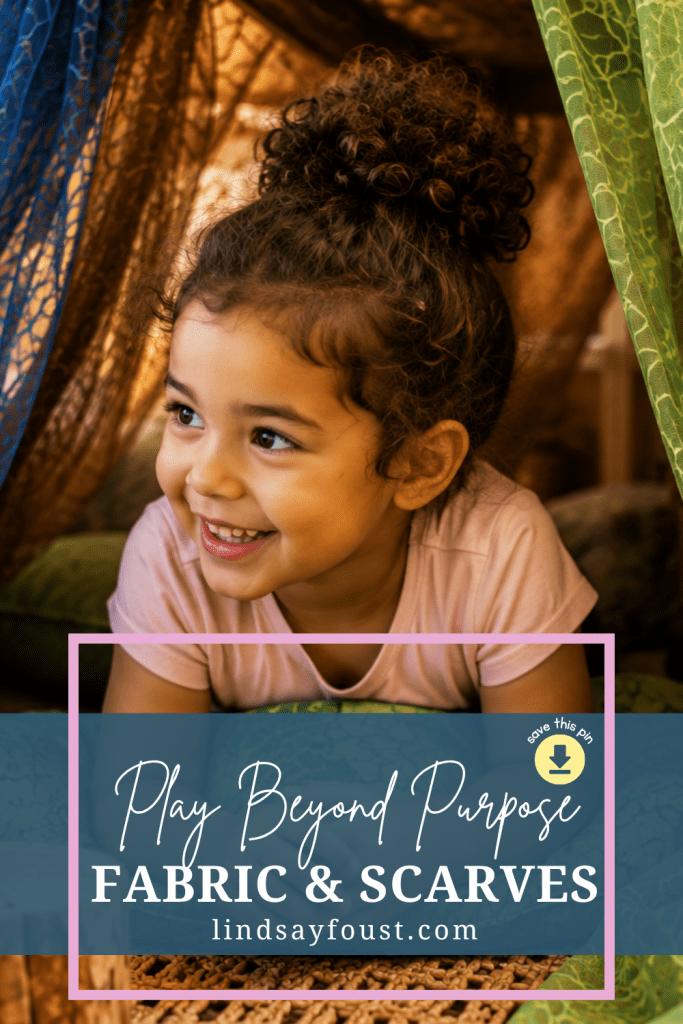
Every year as summer approaches, our preschool begins planning its summer program. For the past several years, I’ve become the unofficial “theme person” at my school.
“Lindsay, can you help us come up with summer themes?” my director asks.
Part of me gets excited every time. The other part thinks, “Here we go again.”
Traditionally, our summer program follows a familiar format: a weekly theme with a planned activity for each day. Every classroom follows the same theme, and same activity… just like the rest of the school year. It becomes a cycle of wash, rinse, repeat. Different theme, same approach.
This year, I wanted something different.
I started thinking about a moment from a few years ago when I was cleaning out the classroom. There was an old roll of Christmas wrapping paper that had been sitting around for who knows how long. Nobody wanted it, and I was ready to get rid of it.
Instead, I handed it to the children.
“You can play with it,” I told them.
The looks on their faces were priceless.
“What do we do with it?” they asked.
“Whatever you want.”
More confused looks.
“Do you want to rip it up?” I suggested.
Their eyes immediately lit up.
Without another word, they started tearing into it. Paper flew through the air. Children tossed it, buried themselves in it, and even pretended to swim through the piles of scraps.
“This is the BEST DAY EVER!” They repeated it over and over again.
And all of that joy came from a simple roll of wrapping paper.
That was my lightbulb moment.
What would happen if we took everyday objects and used them in unexpected ways?
The idea sounds simple, but I couldn’t stop thinking about it. I pitched it to my director, and she loved it. We decided to build our summer program around ordinary objects explored through open-ended play.
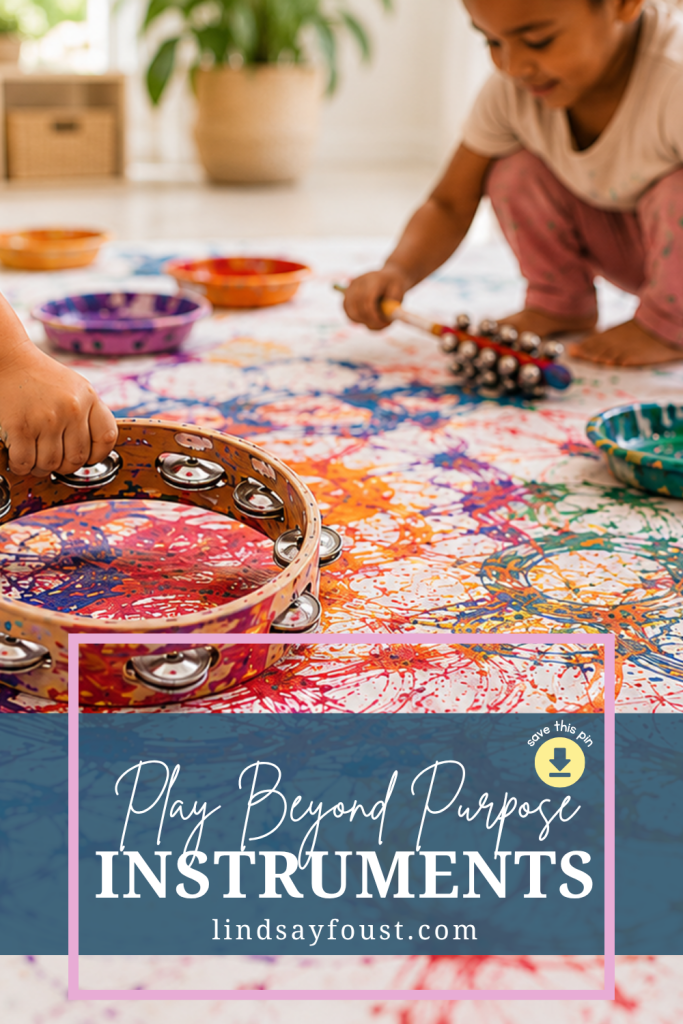
When summer began, our first theme was instruments.
I was excited to see how teachers would transform them into something new and unexpected. Instead, many activities looked very similar to the projects we already did throughout the year.
At first, I felt frustrated. Then I stopped myself.
Not everyone thinks the way I do.
I’ve been teaching for a long time, and one of my greatest strengths is creativity and curriculum development. Looking at an everyday object and imagining ten different ways children could explore it feels natural to me.
But what if it doesn’t feel natural to everyone else?
That realization changed everything.
I started wondering how many teachers wanted to create more open-ended experiences but weren’t sure where to begin. How many teachers were tired of crafts with predetermined outcomes but needed practical examples of what to do instead.
And that, my friends, is how Play Beyond Purpose was born.
Play Beyond Purpose is built on a simple belief: children don’t always need instructions. They don’t always need a finished product. They don’t always need an adult telling them the “right” way to use something.
Sometimes they just need an invitation to explore.
When children are given the freedom to experiment, create, problem-solve, collaborate, imagine, and discover, incredible learning happens. The skills they develop through open-ended play often run deeper than anything we could teach through a worksheet or step-by-step craft.
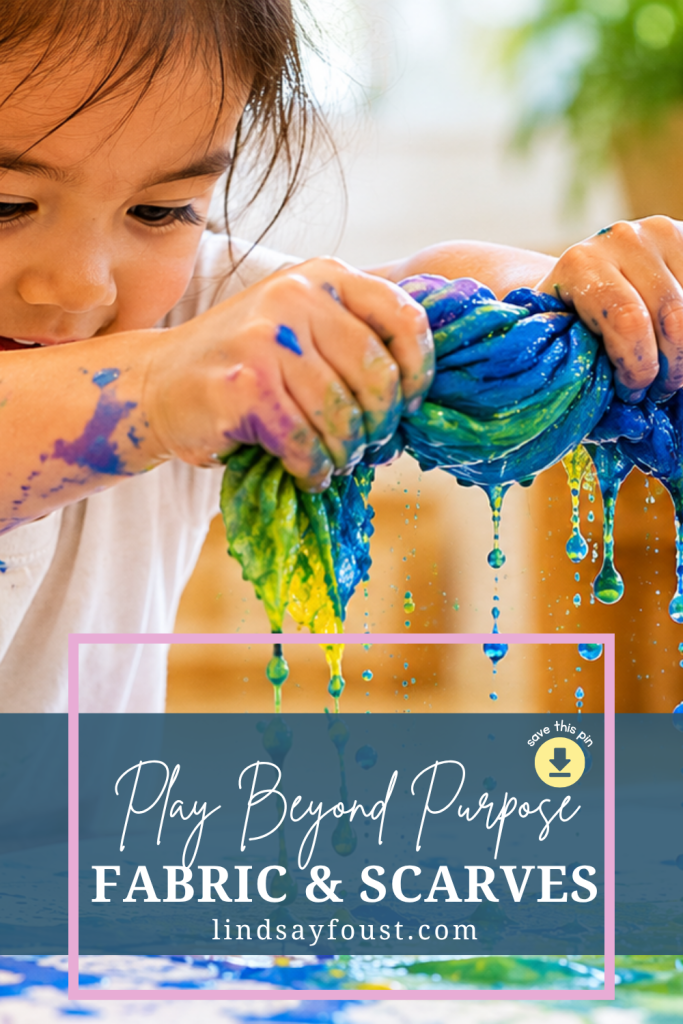
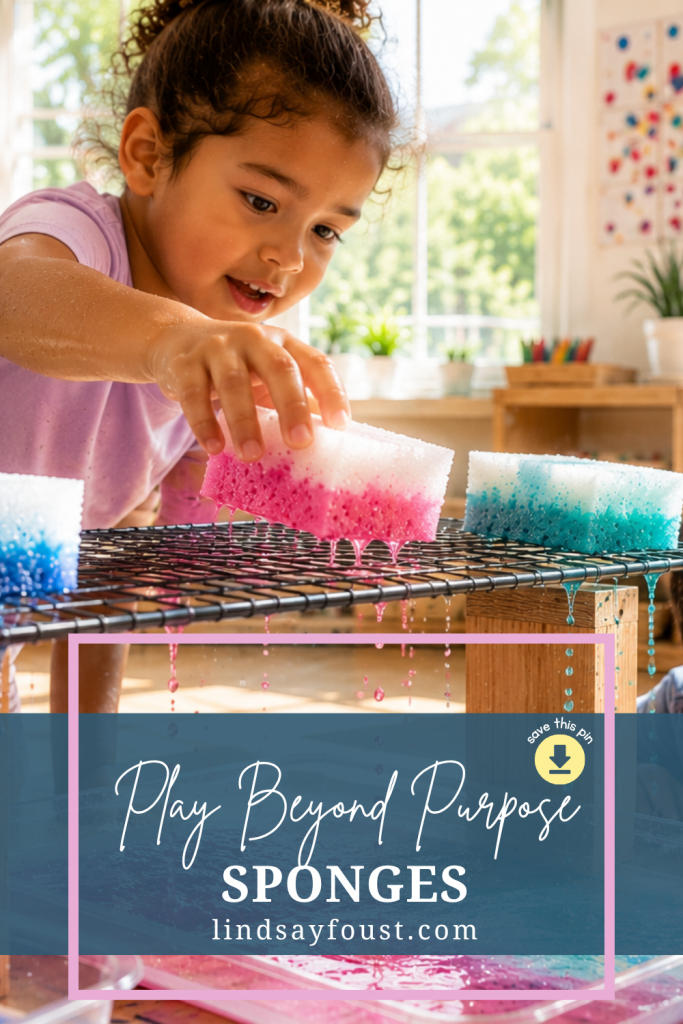
This series was designed to help teachers see everyday materials differently. Each unit takes a familiar object and transforms it into opportunities for exploration, movement, creativity, and child-led discovery.
You’ll find real classroom photos, simple setup instructions, age-range guidance for children 18 months through 5 years old, and activities that are realistic to implement in busy classrooms.
These aren’t worksheets.
They aren’t Pinterest-perfect crafts.
They aren’t activities designed to produce identical results.
They are permission to think differently.
They are encouragement to trust the process.
They are a reminder that play is not separate from learning.
It is learning.
And sometimes the most meaningful learning begins with something as simple as a roll of wrapping paper.
Why Open-Ended Play Matters
When children engage in open-ended play, there is no predetermined outcome, no right answer, and no expectation that every child will create the same thing.
Instead, children are free to experiment, take risks, solve problems, communicate ideas, and follow their own curiosity.
Research consistently shows that play-based learning supports language development, creativity, critical thinking, social-emotional growth, and problem-solving skills. These are the very skills children will rely on throughout their lives.
That’s why every Play Beyond Purpose activity is designed with one goal in mind: giving children the freedom to explore while giving teachers the confidence to step back and watch learning unfold naturally.
Because sometimes the best learning happens when we stop asking, “What are they making?” and start asking, “What are they discovering?”
Browse the series now! —-> Play Beyond Purpose


2 thoughts on “Why Open-Ended Play Matters: The Story Behind the Play Beyond Purpose Series”